Palace
The palace (Qasr al Murabba (Qasr = the “square” in Arabic) is located just opposite the National Museum and is, with it, one of the most important historical landmarks and museums of the city. We’ve been pretty unlucky over the last few years, as the Palace has been closed for renovation work, most recently at the end of 2025. Nevertheless, it’s well worth a visit, as even its outward appearance is impressive. Its courtyard, with its fountain surrounded by palm trees, is an oasis of calm in its own right. What’s more, it’s just a few steps away from the National Museum. The museum attached to the Palace, which I’ll discuss below, is well worth a visit in its own right.
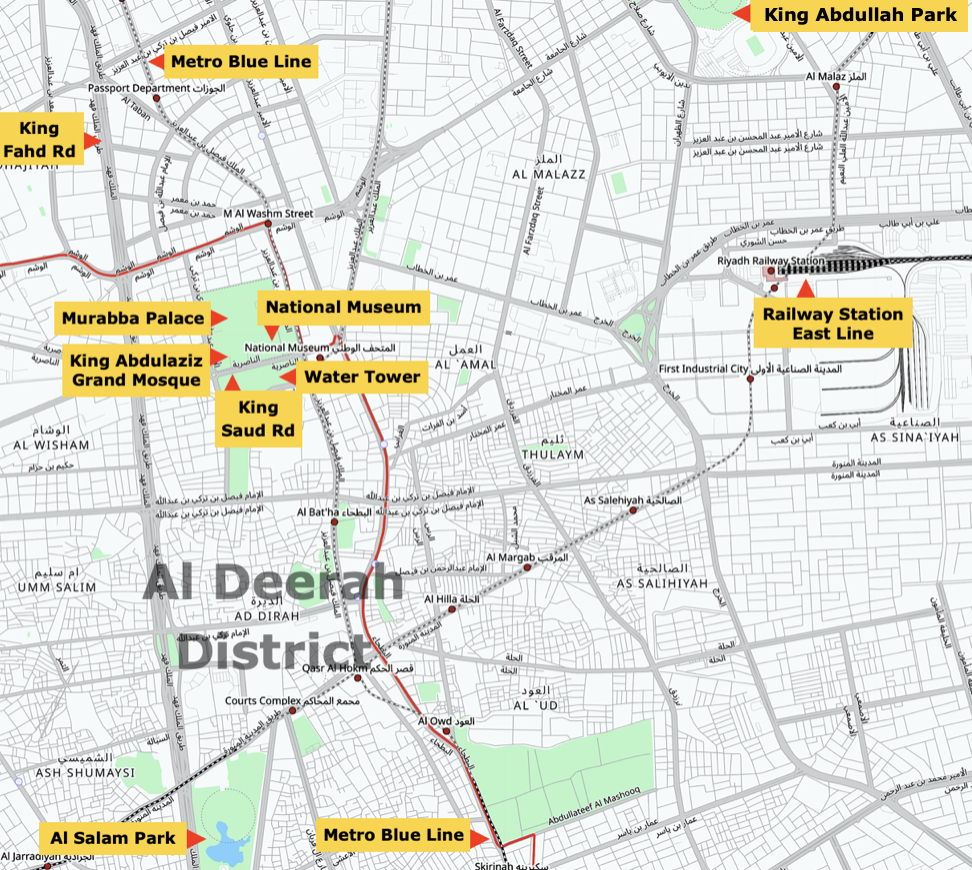
The two-story palace was built by the founder of the kingdom, King Abdulaziz, from 1936 to 1945 outside the walls of the city at that time, on a plot of land called “Murabba Al-Sufyan”, which was used for agriculture during the rainy season. The plot of land as well as its square shape of 400 m by 400 m gave it its name.
The king moved from his former court in Masmak Fortress to the palace when its construction was completed in 1945. Since then, it was both his residence and court until his last day. King Abdulaziz received kings and heads of state there.
Although the complex was primarily intended to serve residential purposes, the siege wall with its numerous towers surrounding the palace is reminiscent of contemporary fortresses of the time.
The palace follows the traditional Nadjid style with an overall cubic shape. It has an inner courtyard and covered walkways. The huge massive walls, interior and exterior ceilings are built of tamarisk and palm fronds. The wooden beams of the ceilings follow geometric patterns in black, red and yellow.
Simplicity is the main design feature of the palace. Traditional geometric decorations and colourful patterns were used in the rooms of the palace, including triangular patterns embossed in the ceiling.
Mosque
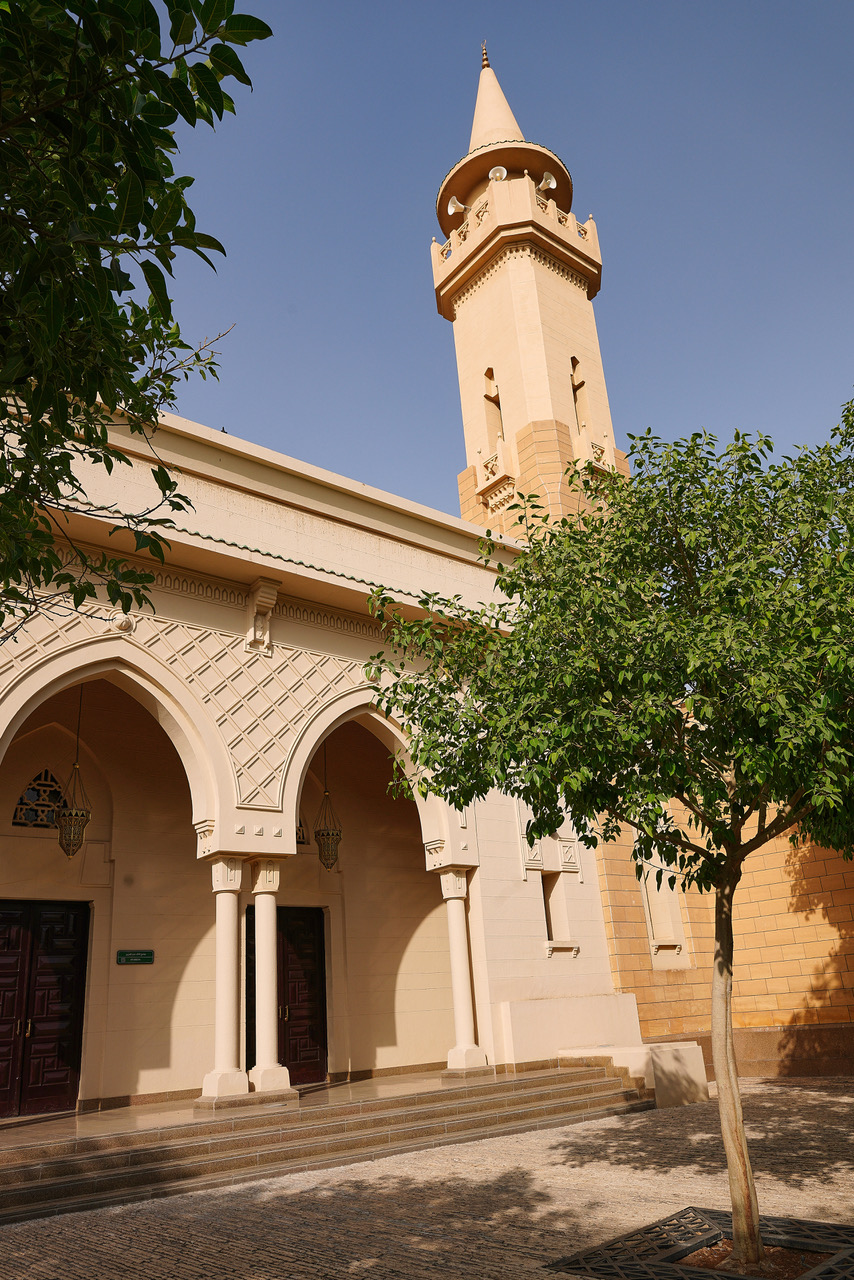
The gate on the south side served as the main entrance to the King Abdulaziz Grand Mosque bordering King Saud Road; it was the King’s “private” mosque.
Museum
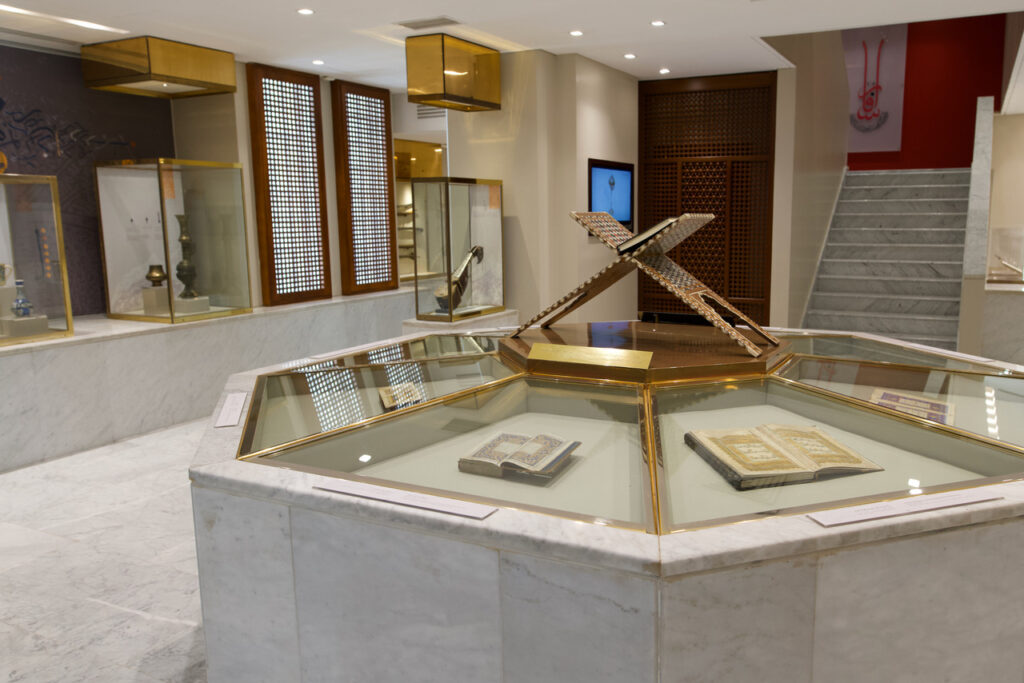
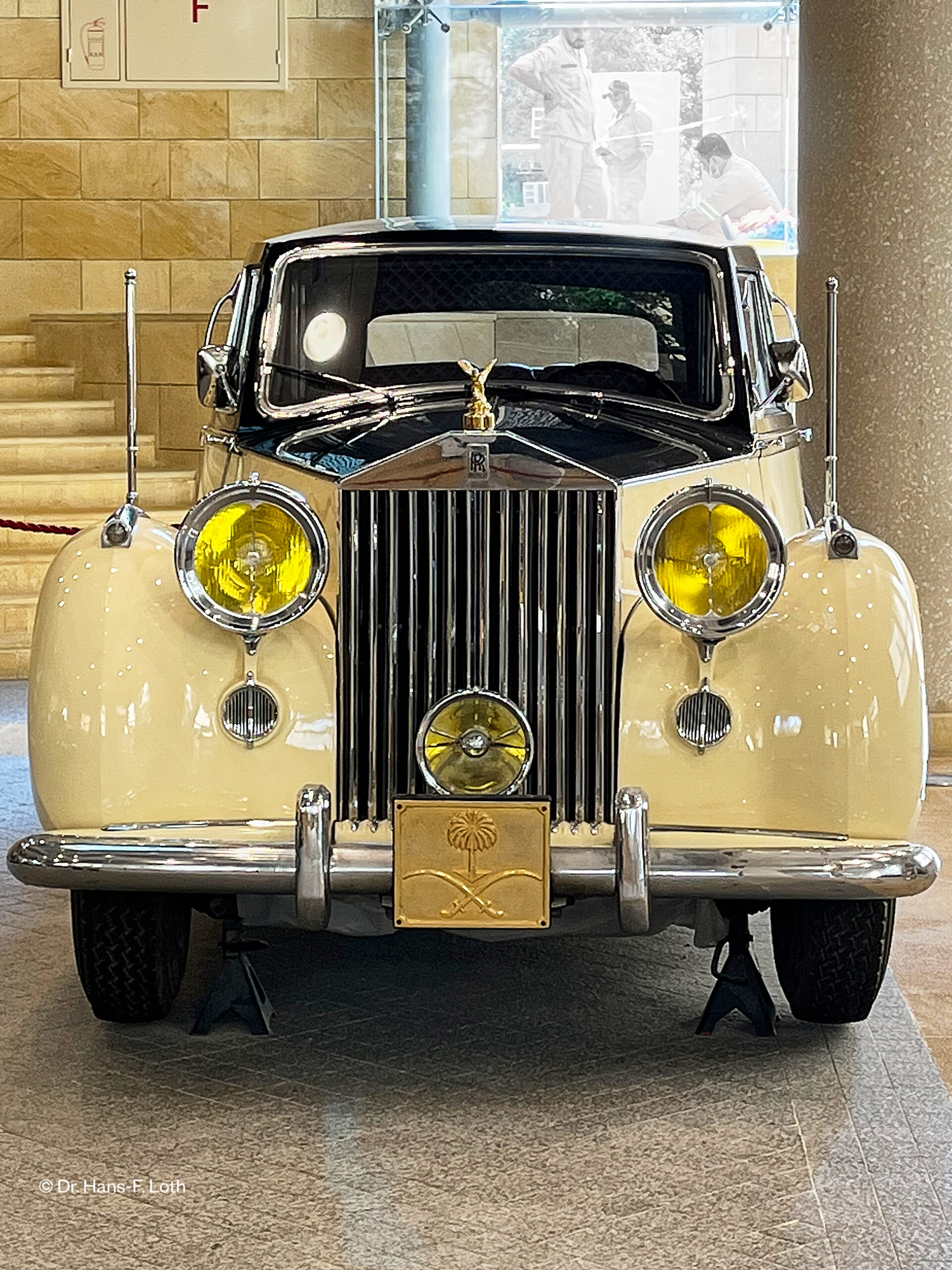
Murabba Palace is also a museum and houses important archival collections of Riyadh, as well as, among other things, memorabilia, some vintage cars, including a Rolls-Royce that Winston Churchill gave to the King in 1946.
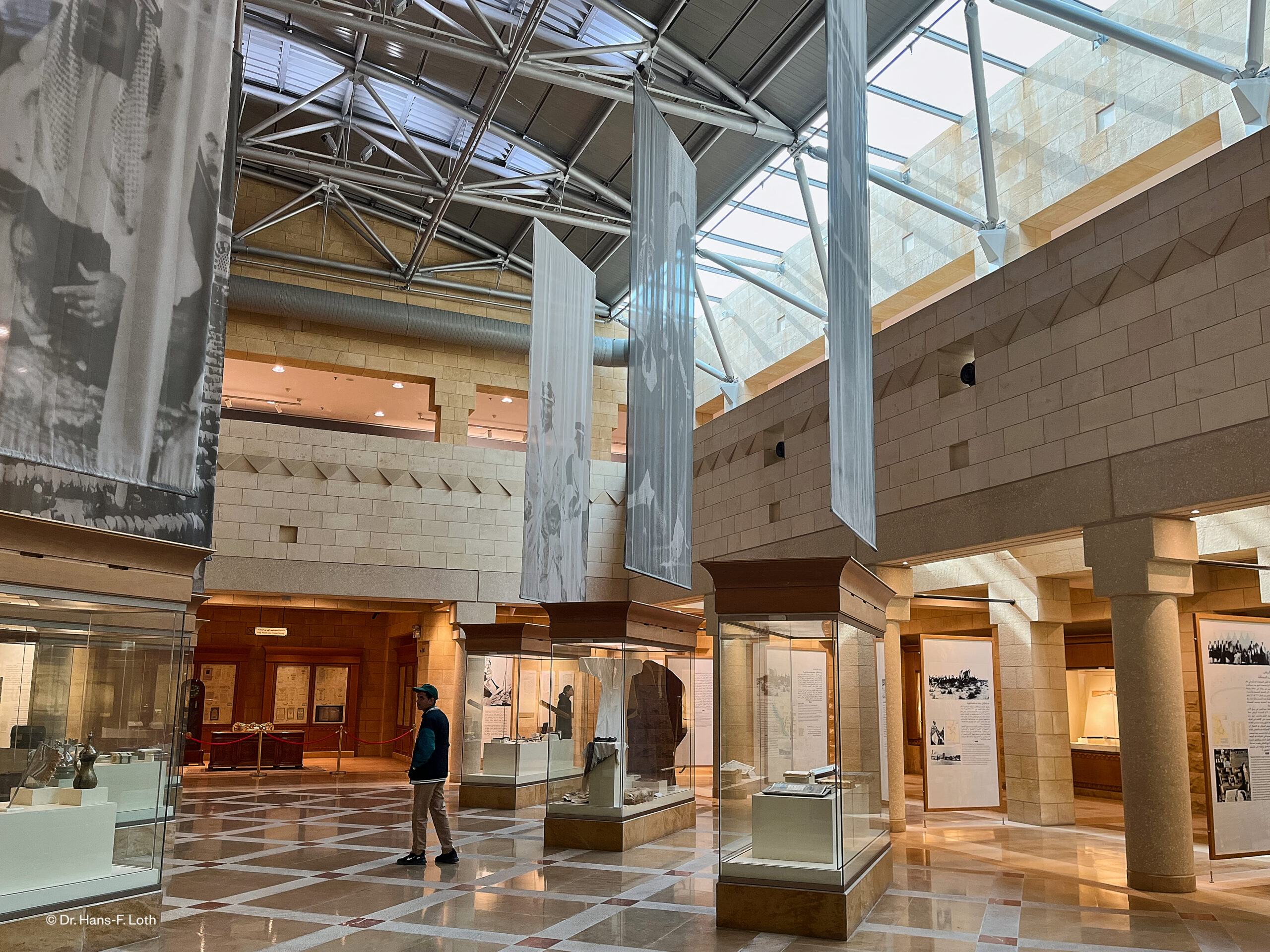
The museum is modern and its exhibits are presented in a clear and organised manner. Depending on how deeply interested you are, it won’t take more than 30–60 minutes to tour the museum. It summarises the life of the first King of Saudi Arabia, Abdulaziz, the legendary Ibn Saud, covering his role in the conquest of the various provinces leading up to their unification into the Kingdom of Saudi Arabia in 1932, and his assertive diplomacy right up until his death in 1953 – very interesting, in my opinion.
Address for both:
East to King Saud Road and south to Al Washm Street, GPS coordinates: 24.646501,46.709314; Al Murabba, Riyadh 12631
Opening hours:
Open from Saturdays to Thursdays from 9:00 am to 12:00 pm and from 5:00 to 8:00 pm. On Fridays, it is open during the evening period from 5:00 to 8 pm.