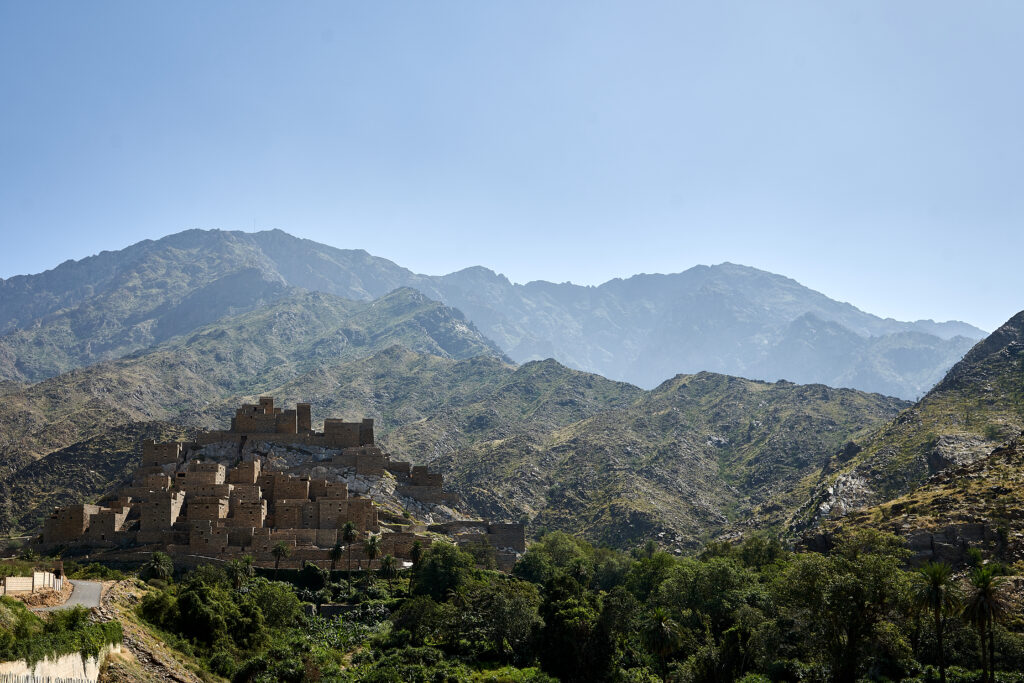
The so-called ‘Marble Village’ – a touristic ‘must’.
The village itself is a prime example of an architecturally self-contained, historical and typical local townscape, which is scattered throughout the region and is mostly – as in the town of Al Bahah, for example – only to be found in rudimentary form. Magnificently embedded in the existing landscape, adjacent to the oasis and perfectly adapted to the local climate, Dhee Ain is the best-known settlement of its kind far and wide. It has been restored and has rightly been recognised as a UNESCO World Heritage Site. Today, Dhee Ain is one of the most important tourist attractions in the region.
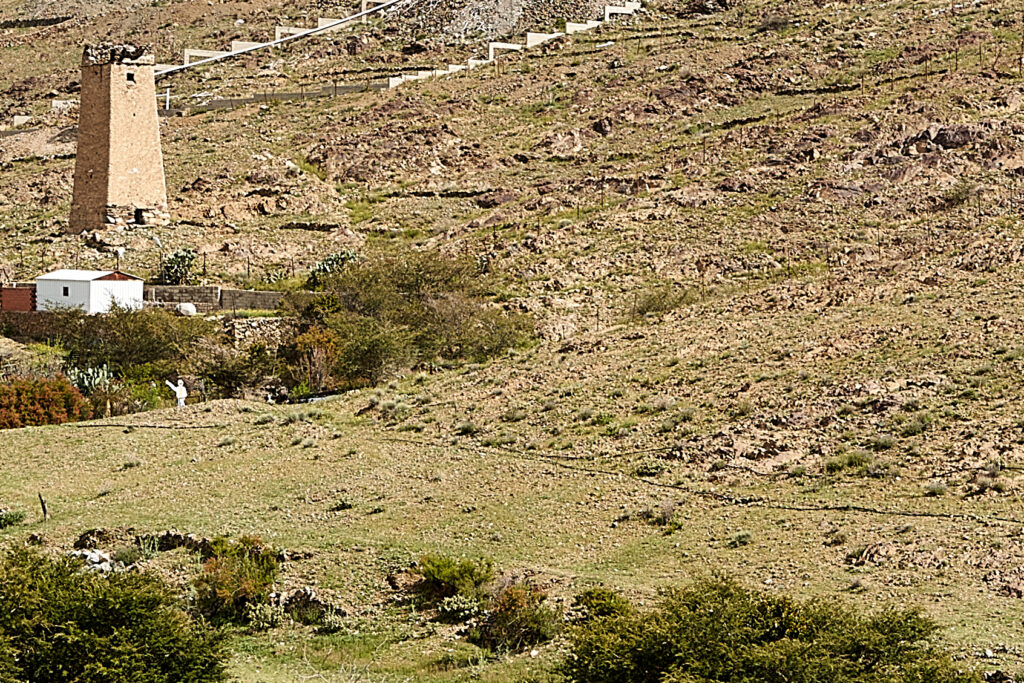
The village is nestled on a rocky white (hence the name ‘Marble Village’) hill carved by nature with rugged terrain at the foot of the ridge on whose plateau the town of Al Bahah lies further north. The hamlet overlooks the neighbouring picturesque oasis with its lush orchards and the Rash Valley to the west. The lush flora is fed by a constantly bubbling spring (Arabic: ‘Ain‘), which comes from the mountains, flows through the village and supplies the idyll with sufficient water. The orchards were and are used to grow lemons, spices and herbs – I have already mentioned the banana plantations above.
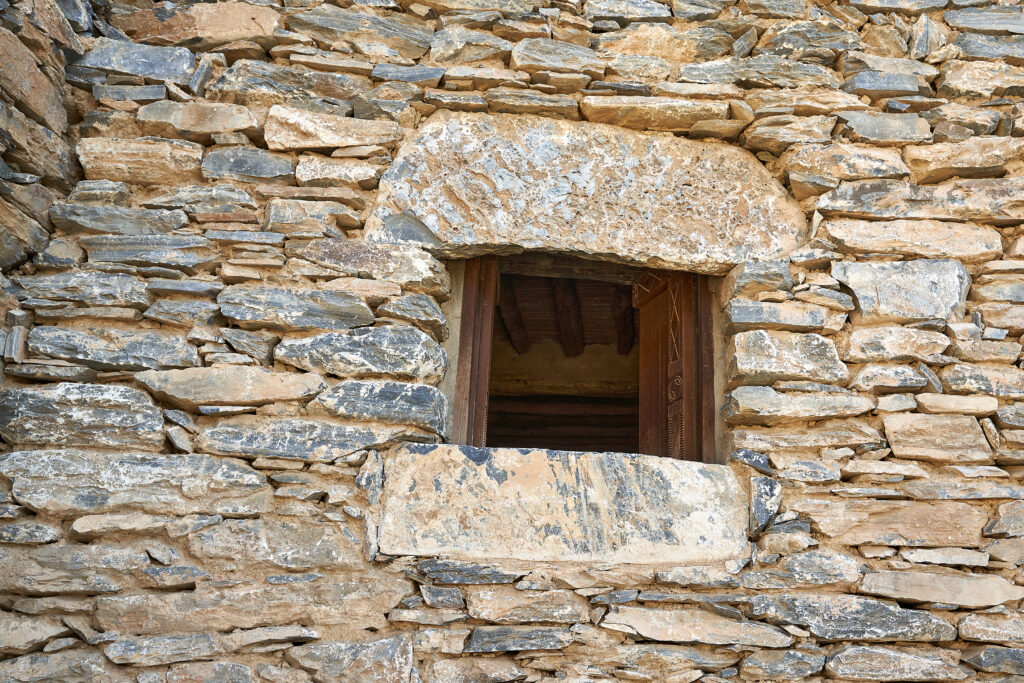
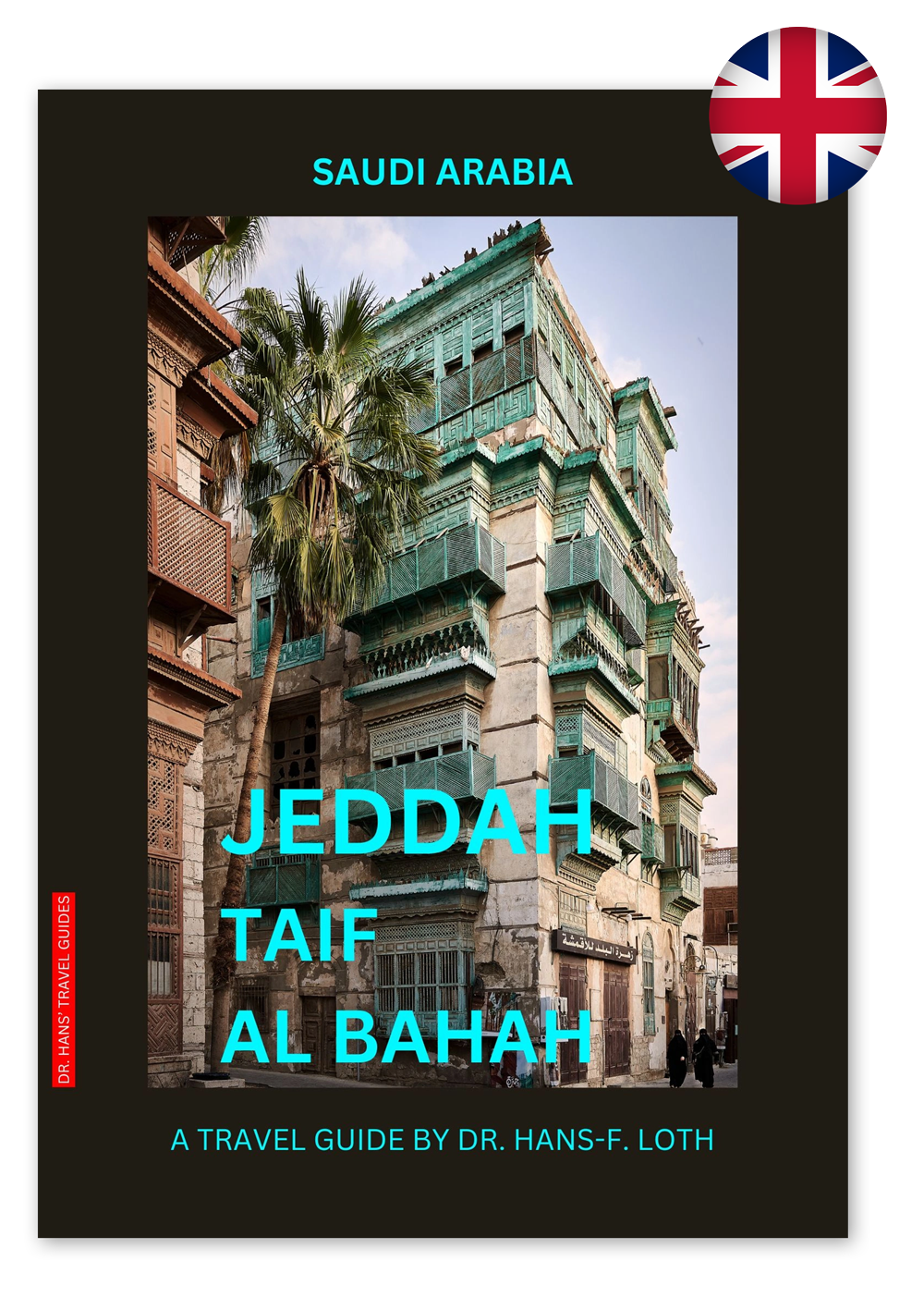
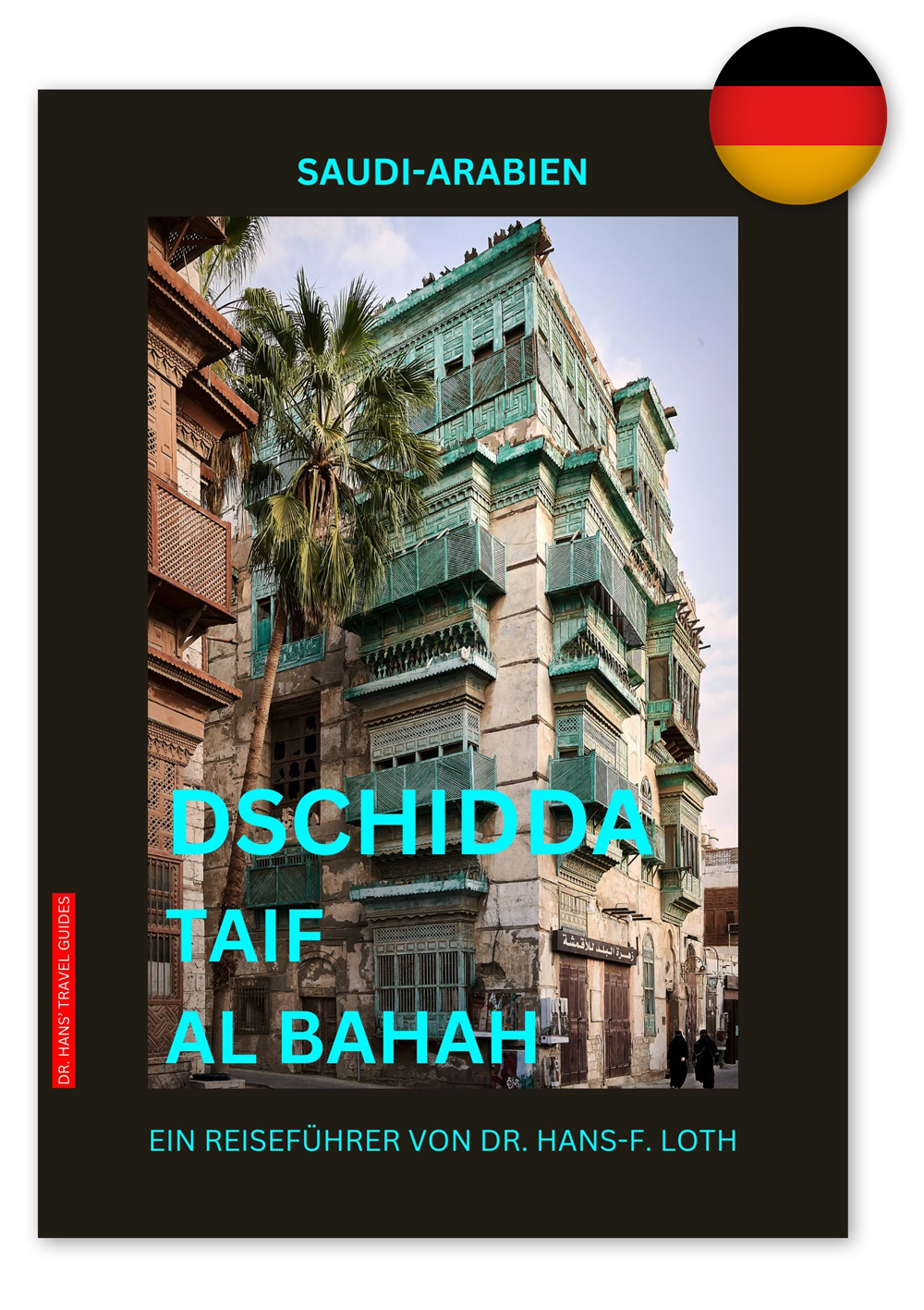
The architectural heritage of Dhee Ain consists of an ensemble of buildings clustered together on five to six levels of the hill, which from a distance look like a single collective fortress. For more information, see my ebook ‘SAUDI ARABIA JEDDAH TAIF AL BAHAH’.