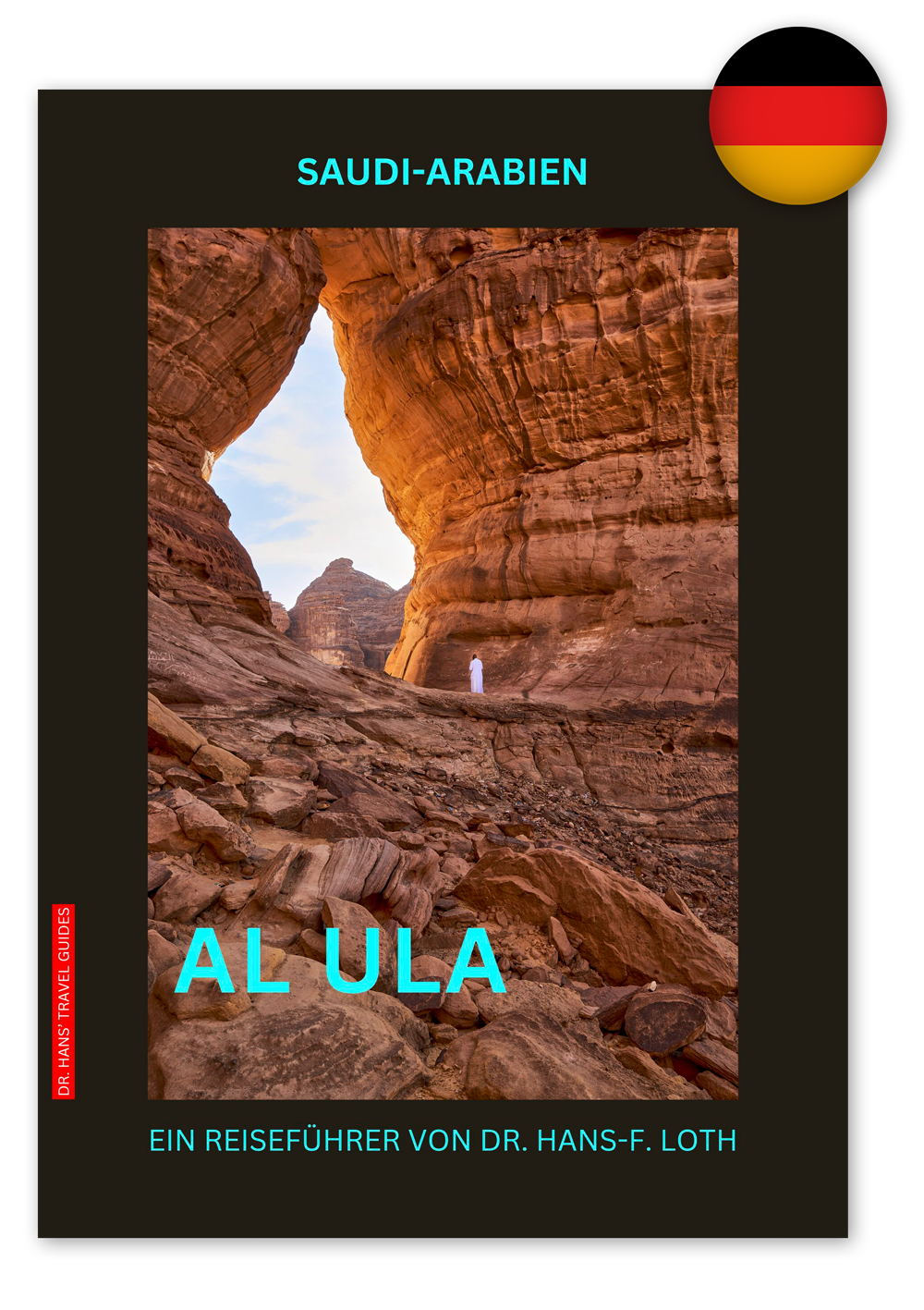
Due to their close proximity, it is advantageous to visit the sights of the Dadanite Kingdom and the Palm Oasis together. The region had fertile oases and thus water supplies since ages, as well as being an important crossroads on the so-called incense trade route.
The area was therefore important enough for the Dadanites to make it the centre of their Kingdom of Dadan (Dedan) and Lihyan (6th to 2nd century BC). More precisely, Dadan was not a city (of any size) in the place where Al Ula is located today, but rather the main settlement called Al Khuraybah.
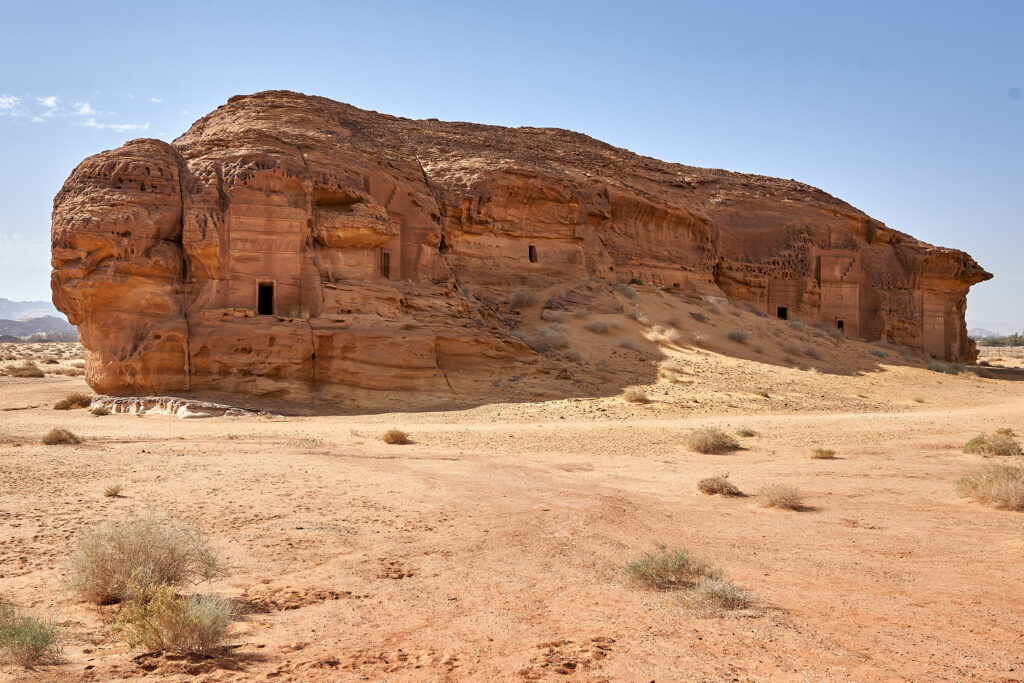
Dadan’s monuments cannot be accessed directly at present, neither the ruins of the former town nor the rock tombs. They are subject to extensive excavation work. The entire area is protected from access by a high wire fence. However, they are clearly visible from a certain distance and are definitely worth a visit.
There is also a small visitor centre on site, located on an access road, which offers a clear and concise overview of the history and what has been found and is well worth a visit.
The burial chambers hewn into the red sandstone massif still provide many mysteries to be solved – who was buried there, was there a special death cult? … and much more. The most famous of these are the two Al Asad Lion Tombs – because of the two lions carved into the entrance. These are the only tombs that are decorated with two lions each, which indicates the outstanding importance of the people buried there.
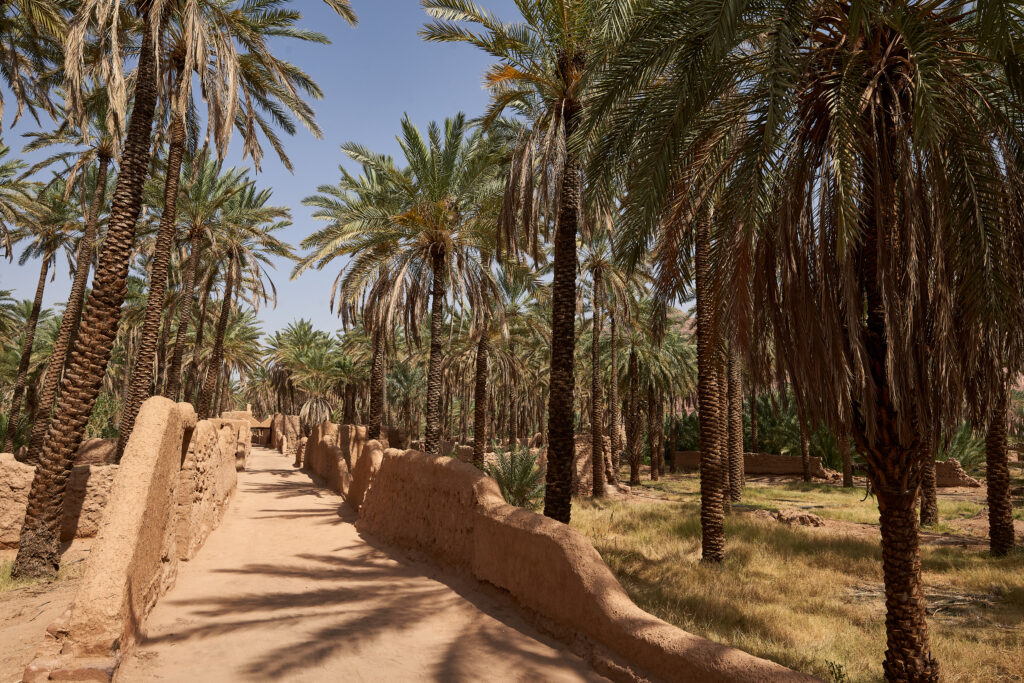
Within sight of the massif containing the rock tombs and to the west of the access road to them lies the lengthy oasis with its countless date palms and strips where citrus fruits are grown. It is also quite literally an oasis of tranquillity, where only the chirping of birds and the occasional whisper of the wind can be heard. A walk leads through the centre of the oasis on an easily accessible path that is around 3 km long and is known as the Dadan Heritage Trail. Whichever direction you take and no matter how far you want to go: You will pass the more or less preserved walls of the mud-brick houses of the inhabitants of Al Ula, who up to almost half a century from today still abandoned their houses in the Old Town in summer and cultivated their palm trees, citrus fruits in the cooler oasis.