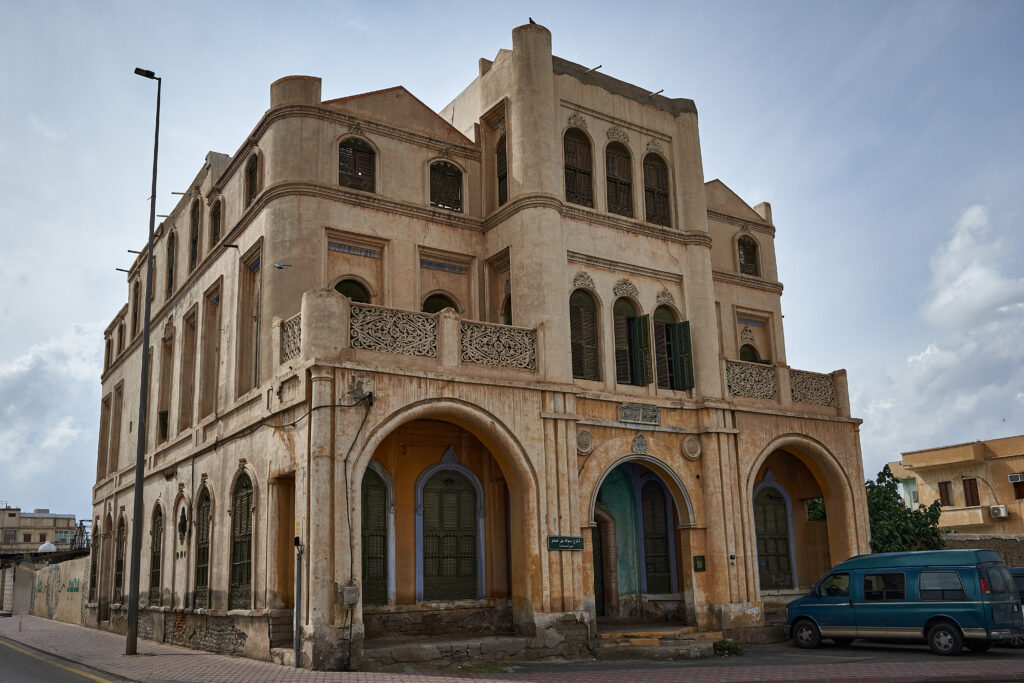
Taif is not exactly brimming with architectural sights, which may be because the city has never historically been among the most important places on the Arabian Peninsula. One such attraction is the Shubra Palace. Situated on the street of the same name, which runs northwards from the old town of Al Balad, it is of great architectural and historical significance to Taif.
The palace was originally built in 1858 as a two-storey structure. The present four-storey building was commissioned by Ali Pasha, Sharif of Mecca, in 1905 towards the end of Ottoman rule and completed two years later. It was given its name because its architecture was inspired by one of the palaces built at that time in the Shubra district of Cairo. The four-storey palace is characterised by its urban style, which is based on a blend of Islamic and Roman architectural forms with the traditional architecture of the Hejaz region. The features of Islamic architecture are most clearly evident in the palace’s arches, rawasheen, doors, windows and ceilings. Following the founding of the state in 1932, the palace served as the summer residence of King Abdulaziz. During the reign of King Faisal, it became the headquarters of the Ministry of Defence and Aviation, and at the turn of the last century was converted into a museum of antiquities and cultural heritage.
The palace is currently (as of March 2026) undergoing complete restoration and will therefore not be open to the public again until a later date. However, the exterior alone is certainly worth a brief detour.