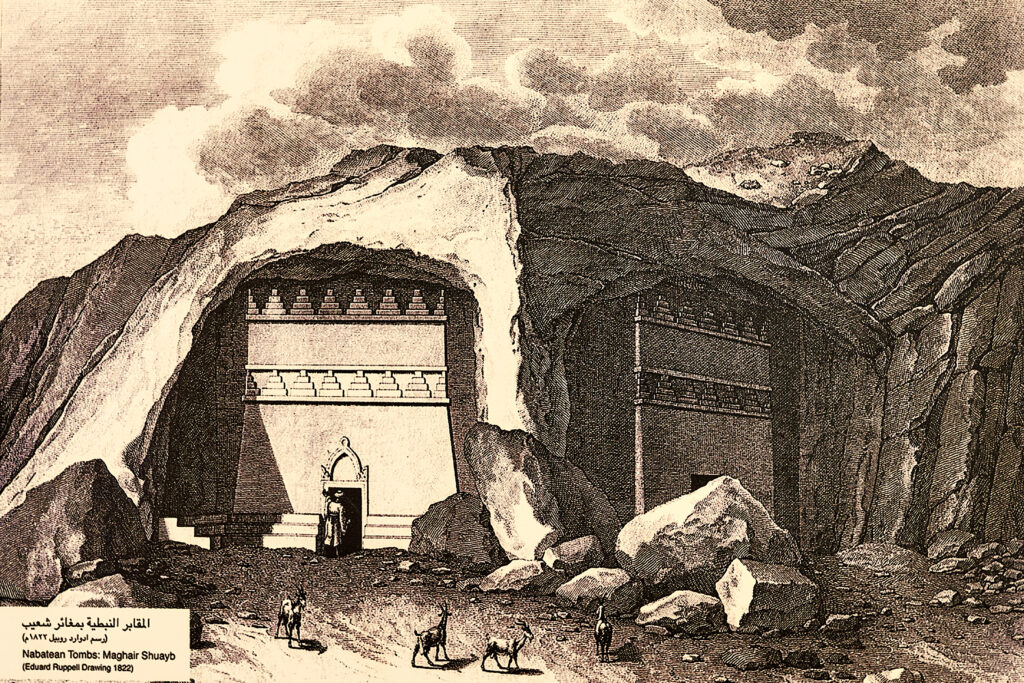
Together with Hegra and Dûmat Al Jandal, Al Bada’ in the Province of Tabuk is considered one of the most important sites of the Nabataeans in Saudi Arabia. This tribe, which left behind hardly any written documents about itself and the time in which it lived, has become a source of fascination, above all because of its mystical rock monuments, especially the monumental rock tombs it created during its relatively short existence. Also the rock tombs of Mughayr Shuayb are attributed to the Nabataeans. As with the monumental tombs of Hegra, the burial sites in Al Bada’ also date back to around the end of the last millennium BC to the beginning of the 1st millennium AD. Three necropolises have been identified being arranged in a semicircle, namely Mughāyr Shuayb in the west, Al Asīfir in the south, each with rock tombs, and Al Rudaybah east of the wadi with pit tombs. Of the 35 tombs at Al Bada‘, 34 are located in the Mughāyr Shuayb area, 24 of which can be visited in the southern area. Most of the tombs feature elements of the façade, the entrance and the interior, as well as the actual burial chambers. Some of the tombs have been destroyed. Only a few of them have decorations on the façade, and most of the stylistic elements used are step-shaped, i.e. ziggurat-shaped ornaments, as already known from ancient Assyrian depictions in the ancient landscape of northern Mesopotamia. The decorated tombs contain most of the preserved inscriptions. The two tombs located next to each other at the top of the Jabal Mūsālla hill were identified early on as the ‘Tombs of the Kings‘. Unfortunately, there are many senseless scratches from visitors into the soft sandstone at the entrances to the respective tombs
A small museum at the foothills of the tombs presents a nice overview on the tombs’ and region’s history and culture.
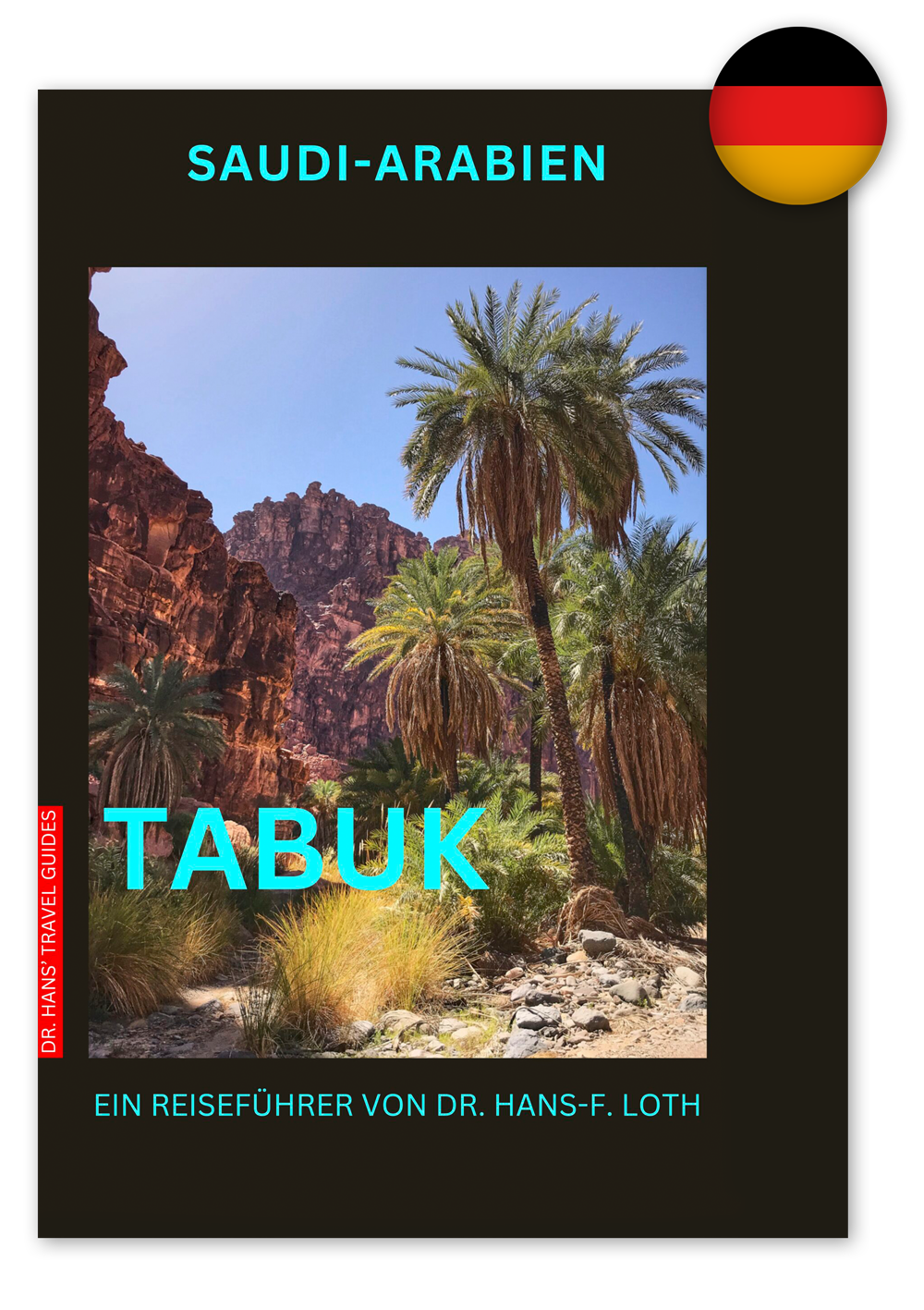
For a brief journey in time to the Nabataeans, see my ebook ‘SAUDI ARABIA TABUK‘.