Although the castle in its present layout was not built until the 16th or 17th century, there was previously a fortification here which, together with the nearby Al Sukkar spring (also known as Ayn al-Sikr), played a continuous and crucial role in the region and the village for well over a thousand years.
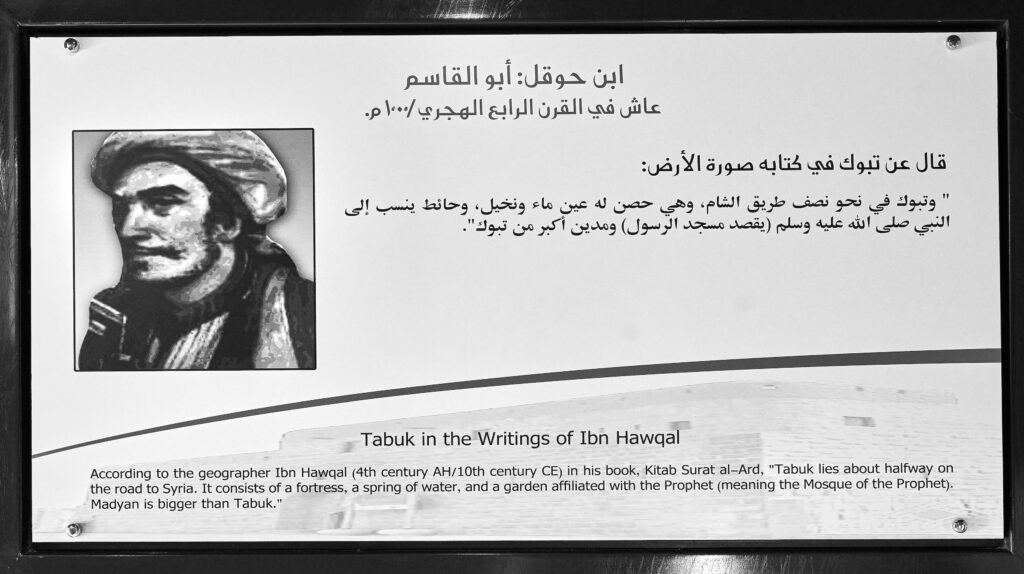
The Tabuk Fortress was built during the reign of Ottoman Sultan Suleiman around 967 AD and renovated during the reign of Mehmet IV just under a hundred years later. This renovation was recorded on tiles that can still be seen today above the entrance arch of the fortress. Many travellers who passed through Tabuk after the castle was built mention its existence, but their accounts focus more on the spring of Tabuk and do not mention the condition of the building. As far as can be ascertained, Khalid bin Isa Al Balawi Al Andalusi, who passed through the town on his pilgrimage in 1337 AD, was the first to report that it was ‘a ruined place with crows sitting everywhere on its walls’. It is not known when the city – and thus presumably also the fortress – was destroyed. In any case, in the centuries which followed, the town and with it the castle were rebuilt again several times. In 2013, it was renovated once more and has since served as an archaeological museum.
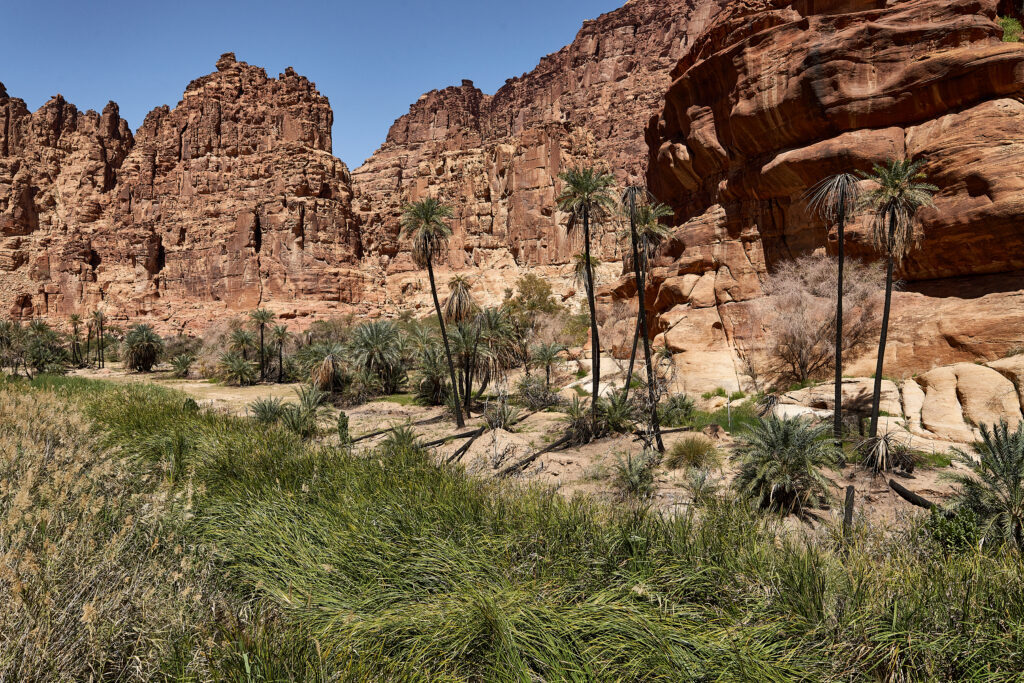
The spring just adjacent to the castle plays a prominent role in the published perception. This is because its creation and abundance of water are inextricably linked to the Prophet Muhammad who – according to tradition – camped out here for a couple of days during his visit to Tabuk in a planned military mission to fight against the Byzantines (that, however, did not take place because the enemy did not show up).