The fauna includes not only the baboons, which can be found everywhere and which travel in packs.
Due to a lack of natural predators, baboon populations have proliferated. Today, they are seen as a nuisance and a danger, especially by farmers, because they invade farms, steal or destroy supplies and fruit and can be extremely aggressive. Feeding them is prohibited. Avoid the immediate vicinity of the animals!
Recognisable by the elongated black tufts on their ears, caracals can be found in the western part of Saudi Arabia, particularly in the Jabal Shada reserve. The caracal preys on small mammals as well as birds, which it can also catch from the air by jumping up to three metres. The (very rare) sand cat is the only cat species that lives exclusively in the desert in the western part of Saudi Arabia. It may look cute, but it is a predatory cat and not a kitten. The thick fur around its paws not only protects it from the heat and cold, but also allows it to jump on the sand without sinking in or leaving large paw prints.
There are also numerous bird species, which are beyond the scope of this guide to even begin to list.
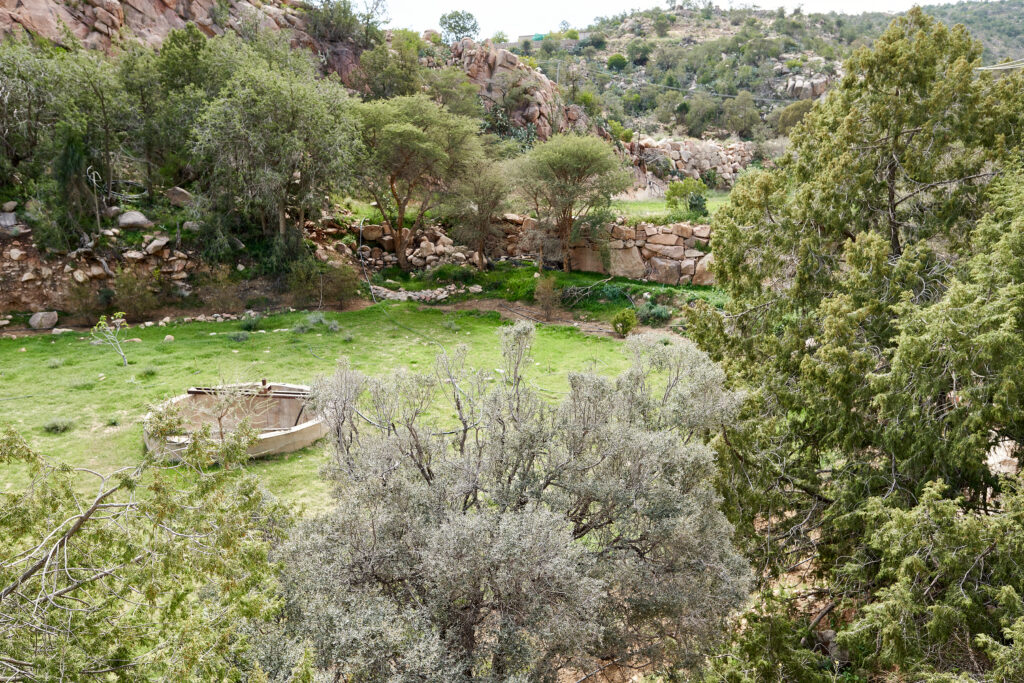
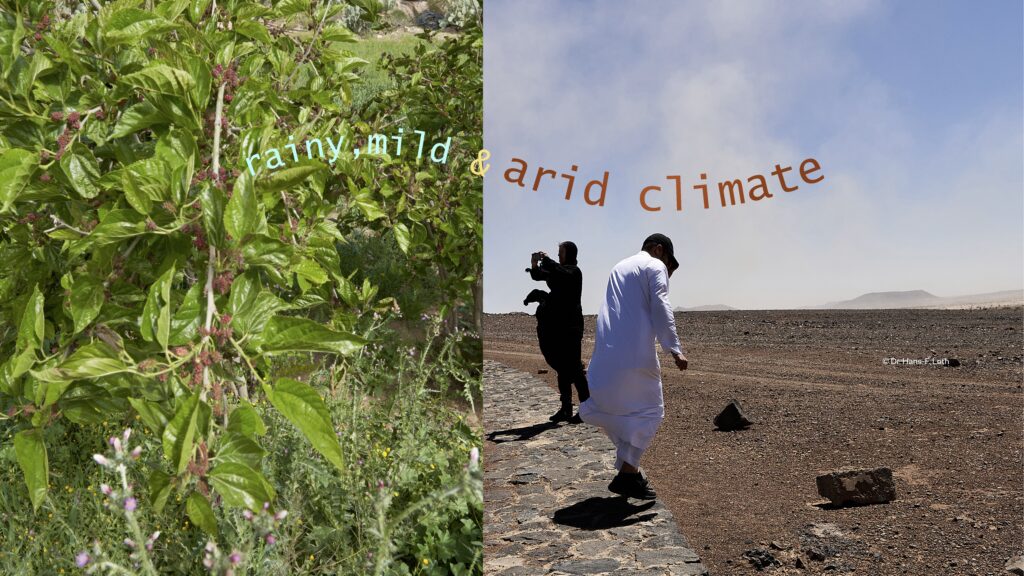
Depending on the altitude and gradient, valleys and plains, soil conditions, an astonishing diversity of flora has developed in this area that is not automatically associated with the country of Saudi Arabia. A typical example of this in this area is the Juniperus. It grows at higher altitudes and its growth and dominance over other plant groups increases with altitude. There are also acacias and (wild) olive trees. The vegetation in this part close to the city of Taif is rather lush and dense. Crops, fruit and vegetables are mainly grown on terraces. The terraced sections are very often supplied with water from their own deep wells.