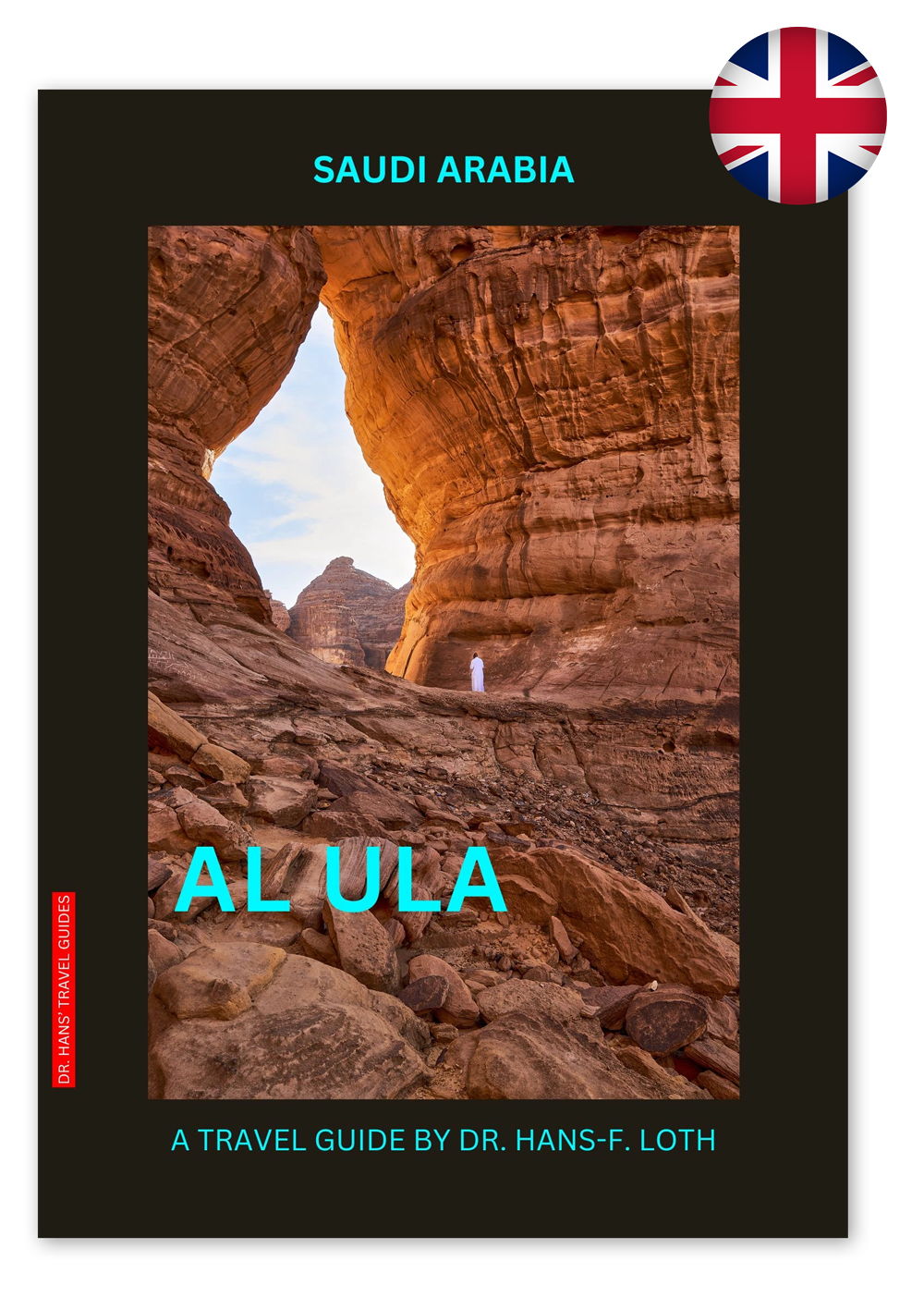
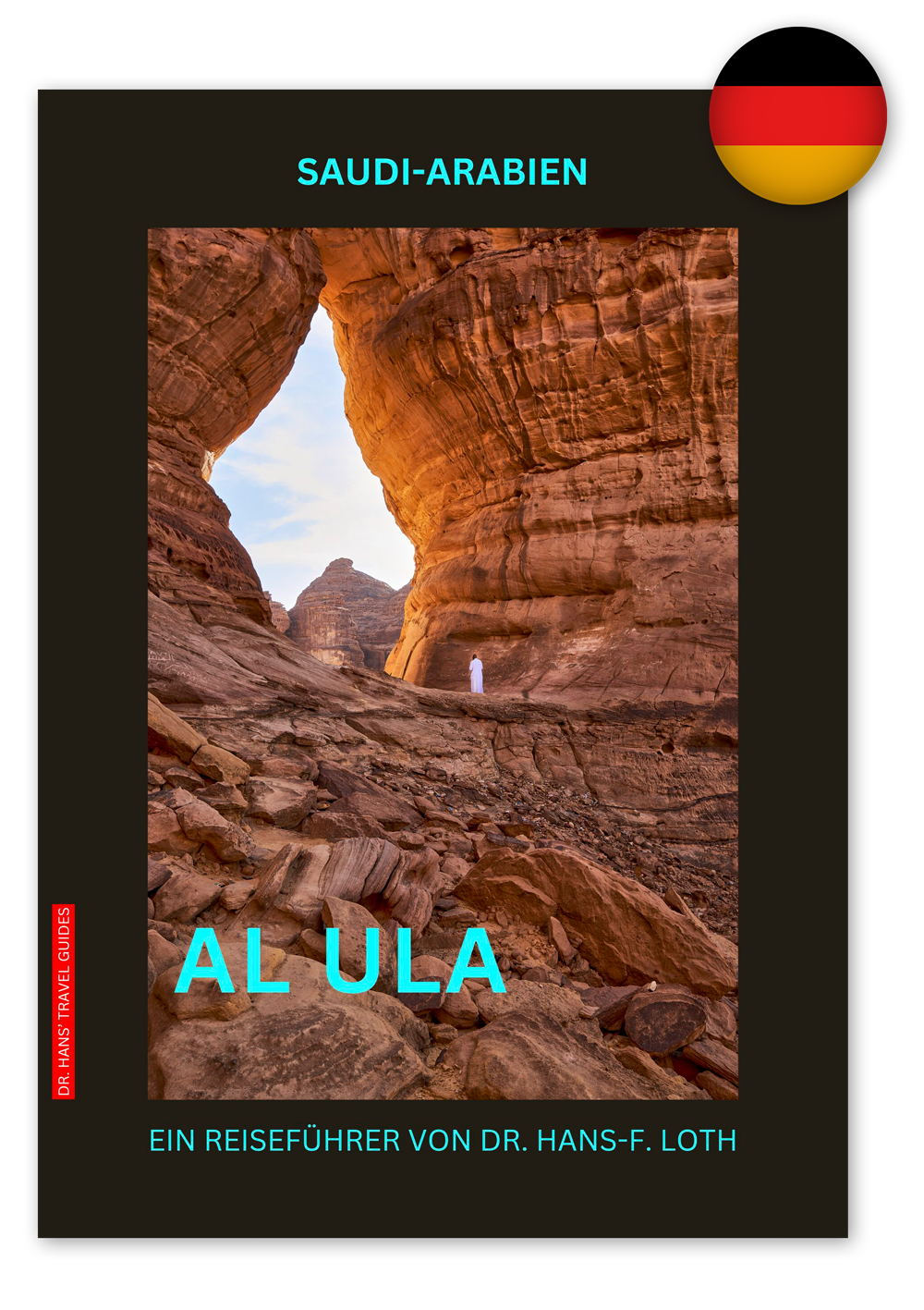
Al Ula is not only the name of the district (governorate: romanised: Muḥāfaẓat Al-ʿUlā) one of seven in the province of Madinah (Medina)), but also the name of a small town in the north-west of Saudi Arabia about halfway along the Tabuk-Medina line.
The city borders on the north of Medina province, not far from the southern border of Tabuk province.#
The town impresses with its extraordinary natural and human heritage. The vast area, which stretches over 22,500 square kilometres, lies in the oasis valley of Wadi Al-Qura running from north to south, nestled between the lava fields of “Harrat Uwayrid” in the west and the sandstone massif of Jabal Ath-Thumayid. Ancient cultural sites dating back thousands of years prove that the area was since ever of great importance due to its underground water resources and its strategic location on the incense route between southern Arabia and Egypt. For up to 5,000 years in the past, Al Ula was an ancient crossroads for traders on their trade route between the Mediterranean and Arabia and even Asia and Africa. Due to its location on this route, Al Ula developed into one of the centres of commercial and cultural exchange on the Arabian Peninsula and formed an important stopover for traders of frankincense, myrrh and other precious goods.
Today, the region of Al Ula, an open-air museum in the heart of the desert, is home to hitherto little-known but vast and important treasures created and shaped by ancient civilisations.
Probably the most famous site in Al Ula is what used to be called Hegra and is now Mada’in Saleh, Saudi Arabia’s first UNESCO World Heritage Site. The ancient city of Hegra, which covers around 52 hectares, was the most important southern centre of the Nabataean kingdom, of which slightly more than 100 well-preserved tombs with elaborate façades carved into sandstone rocks still remain today. Current research suggests that Hegra was the southernmost outpost of the Romans after they defeated the Nabataeans in 106 AD.
In addition to Hegra, Al Ula is home to a number of other fascinating historical and archaeological sites: an old city surrounded by an ancient oasis, Dadan, the capital of the Dadan and Lihyan Kingdoms, considered one of the most developed cities in the Arabian Peninsula dating back to the first millennium BC.