Tayma is a large oasis town with a very long settlement history. Today, it has more than 42,000 inhabitants (as of 2022). It is located about 260 km (162 mi) southeast of the city centre of Tabuk. Without any stops, it takes about two and a half hours to get there on the well-developed HWY 15. The distance to Medina in the south is roughly 400 km (250 mi). The first round irrigated fields appear as well as cultivated date palm plantations here and there, the closer you get to Tayma – an unmistakable sign of groundwater there. The oasis town of Tayma served as a vital stopover on the important trade route that led from South Arabia, today’s Yemen, via Medina to Dumah Al Jandal and further north. The town can look back on a very early, walled settlement that probably dates back to the 3rd millennium BC. The settlement of Tayma seems to be a prime example of how humans were able to adapt to dramatically changing climatic conditions. In fact, the Arabian Peninsula has seen many climatic epochs. Sometime between 5,000 and 4,000 BC, there was a rapid and noticeable change in climate. Precipitation decreased in both quantity and intensity. The nomads in north-western Arabia had to give up their nomadic way of life and were forced to abandon their mobile lifestyle and settle permanently in areas with high groundwater levels.
They established an ‘oasis’ habitat – which is today’s Tayma – and developed amazing agricultural techniques for building wells, irrigation systems and cultivating olive and fig trees.
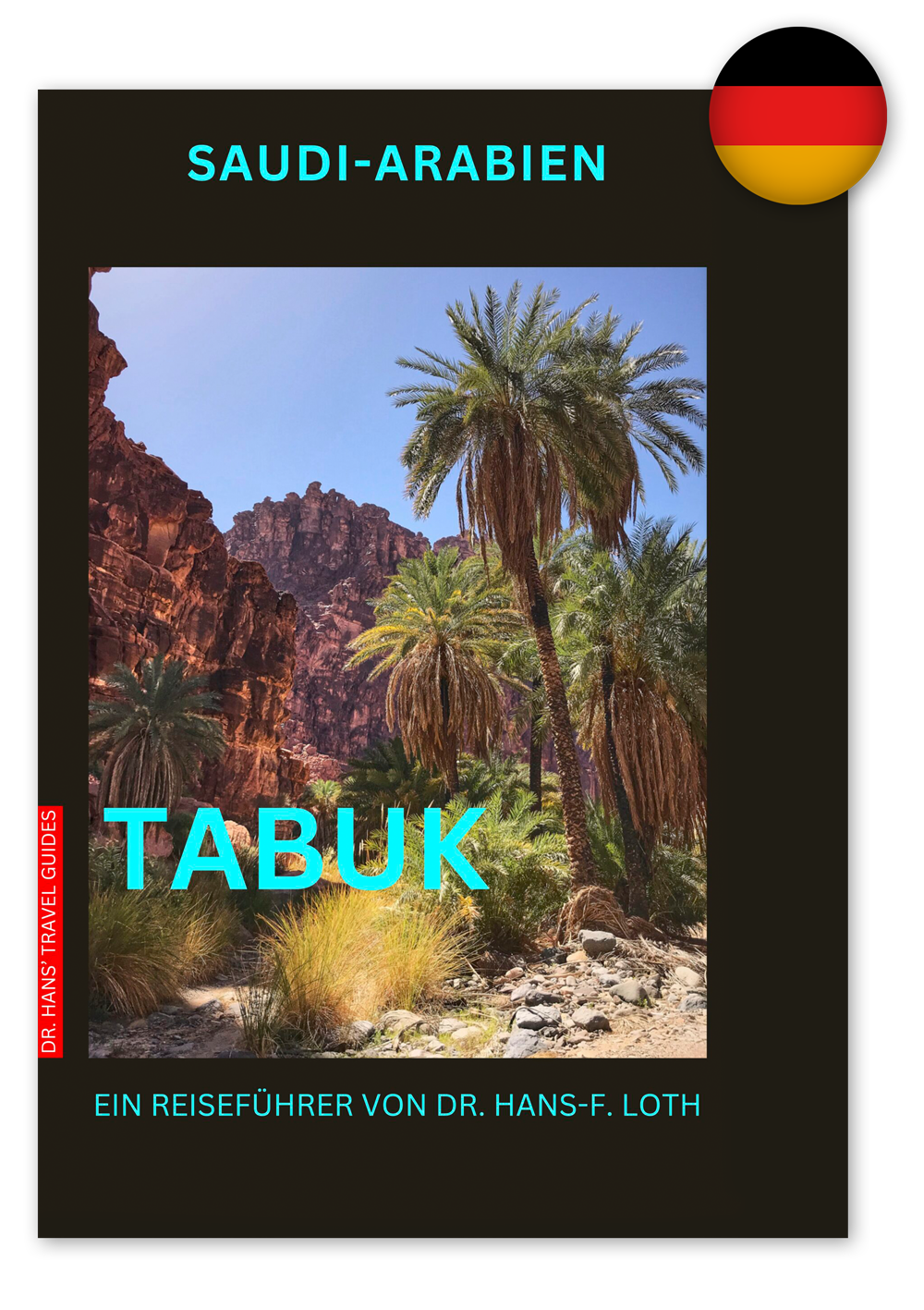
In my ebook ‘SAUDI ARABIA TABUK‘ you can read more about that historic settlement, its ‘networking’ with other villages, its connection to Babylonia and about its sad end.