Coming from Tabuk, just before you reach the historic centre of Tayma, turn left into the narrow residential street Haritha Al Ansari and follow it for about 2.6 km until it ends, with the old centre of Tayma on your right. You will then reach a small new visitor centre with an adjoining car park.
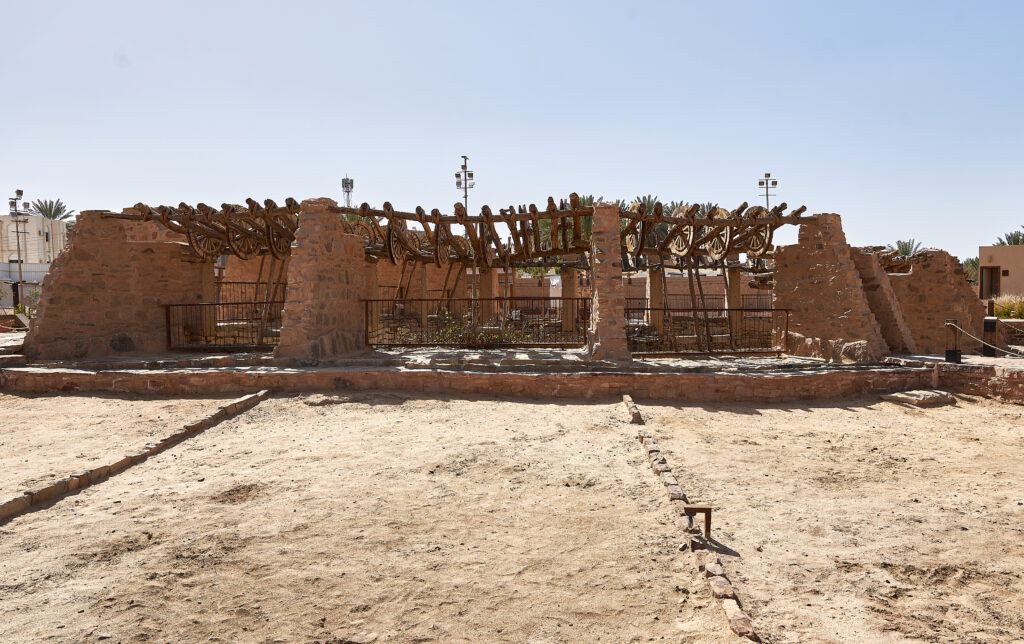
A path paved with natural stones leads to the ruins of a 3,000-year-old (fenced-off) temple complex from the Iron Age, which is believed to have been built in the 6th century BC. It is the Temple Ruins of Salm. After its likely-seeming destruction in the 10th century by extreme Muslims, it was buried under sand and rubble for around a thousand years. A residential unit was joined to it called Al Hamra Palace (‘Red Palace‘) due to the colour of the soil surrounding it. The finds excavated there lead archaeologists to believe that the buildings were never used as a royal residence, but rather that the complex served primarily religious purposes.
The elevated position of the temple complex also offers a view of a huge dried-up salt lake to the north of Tayma. It is a paleo-lake that formed several hundred thousand years ago, covering an area of almost 20 km2, which today forms a flat layer of salt (‘sabkha’).
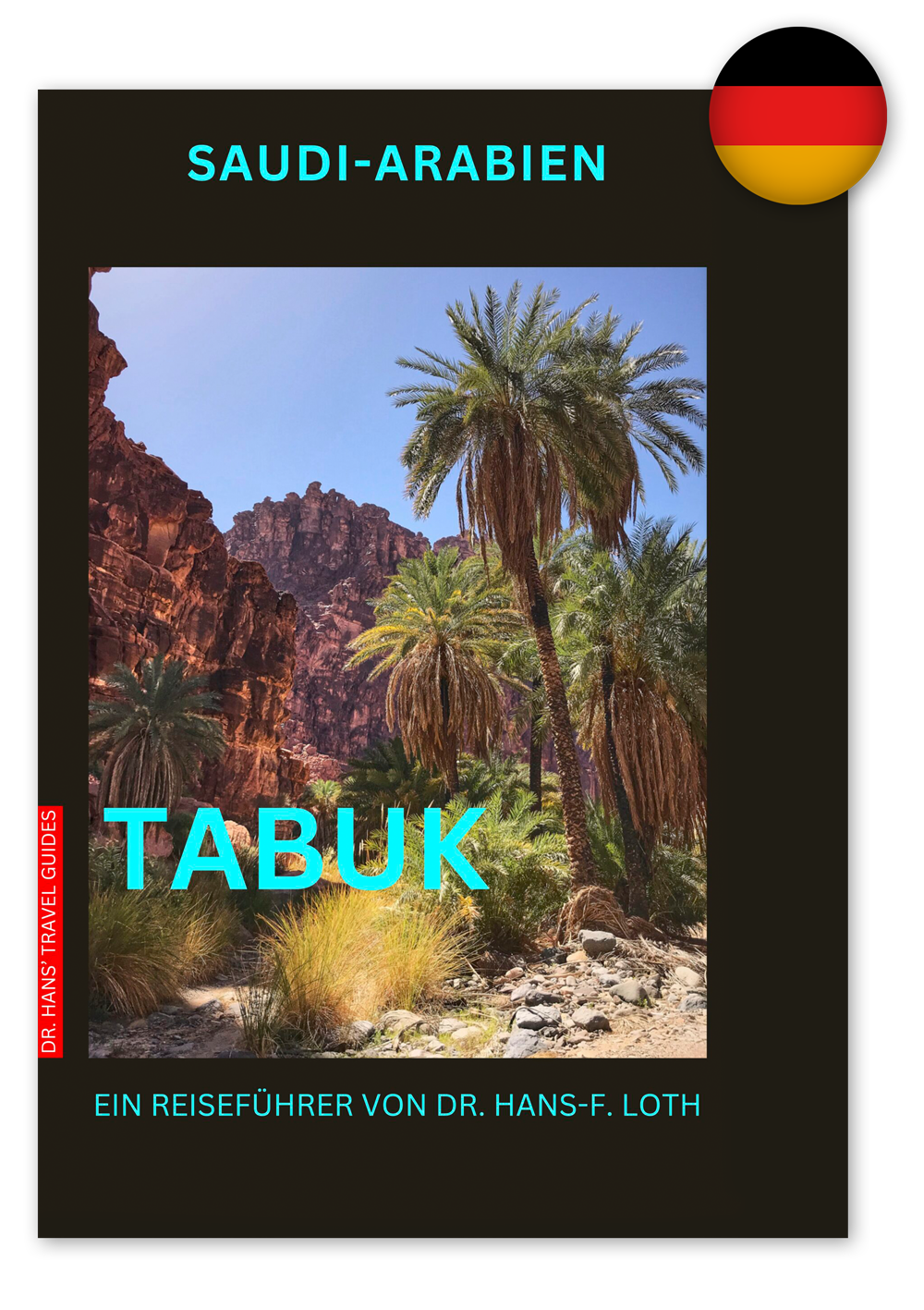
My ebook ‘SAUDI ARABIA TABUK‘ offers more insight into the deity of Salm, the famous ‘Tayma Stone‘, the ‘Al Hamra Stone‘ and the dried up salt lake.