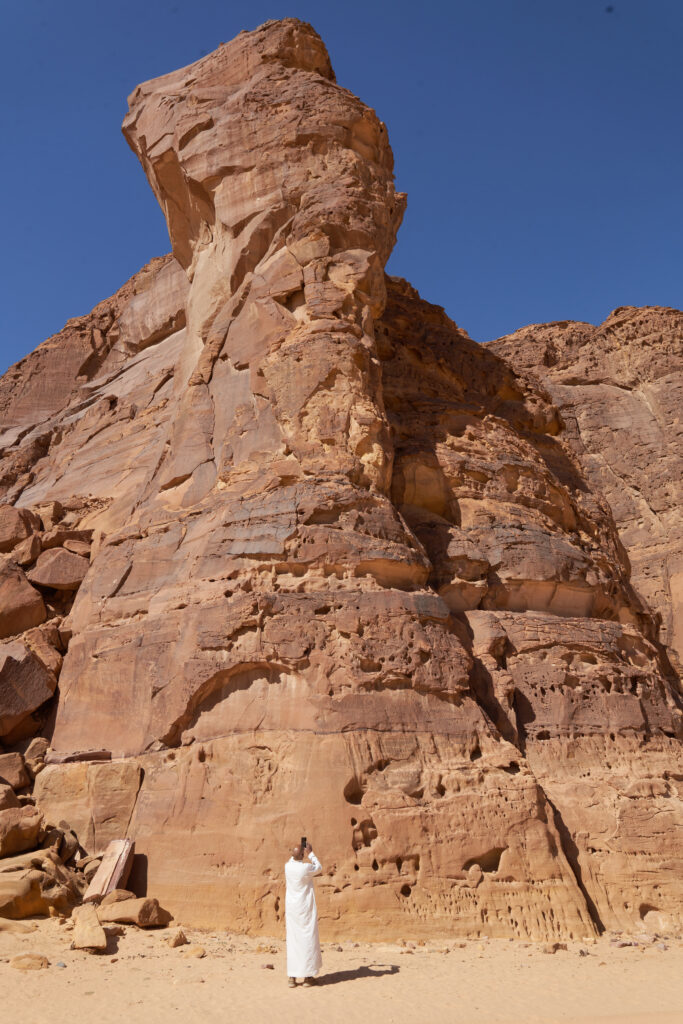
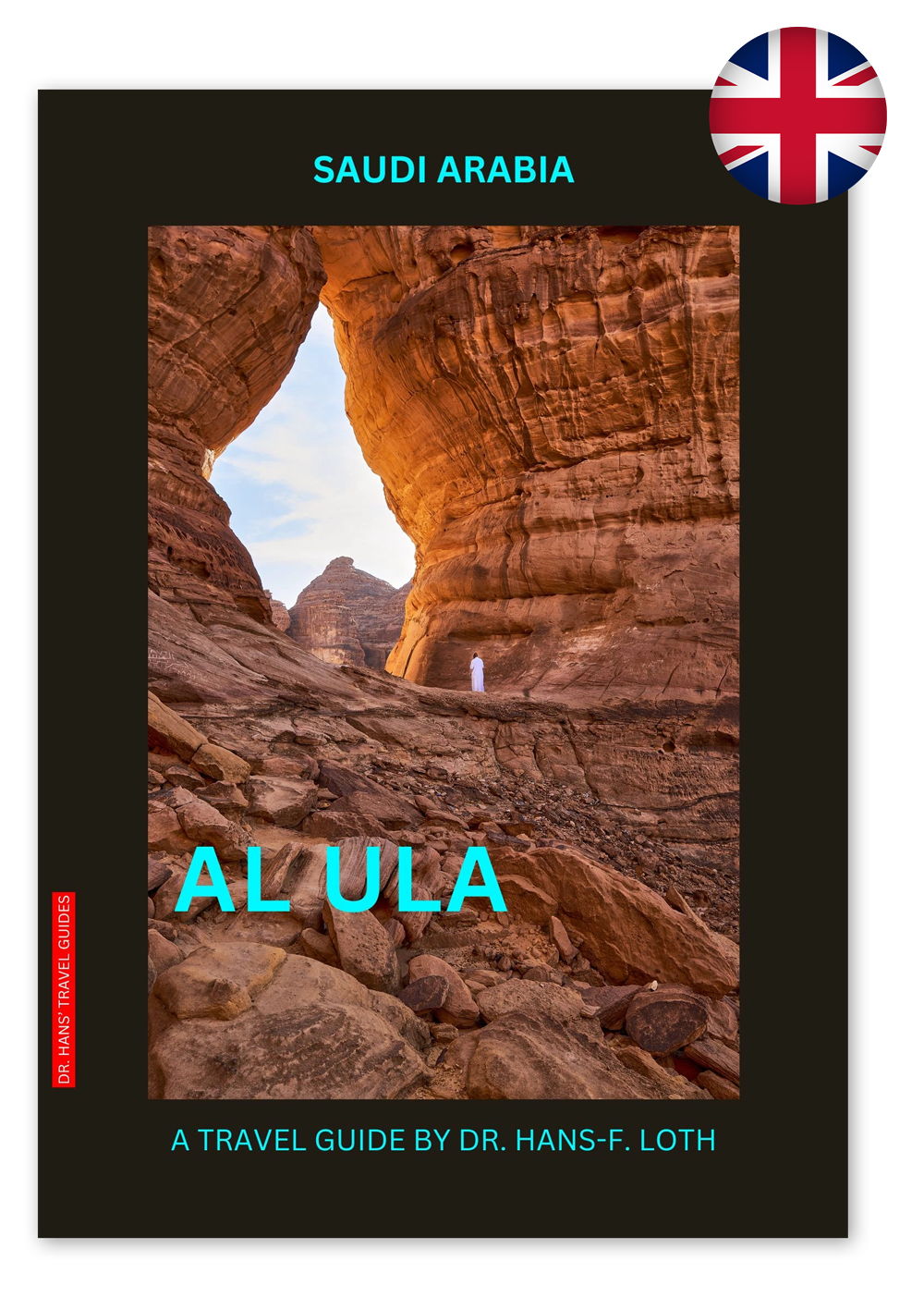
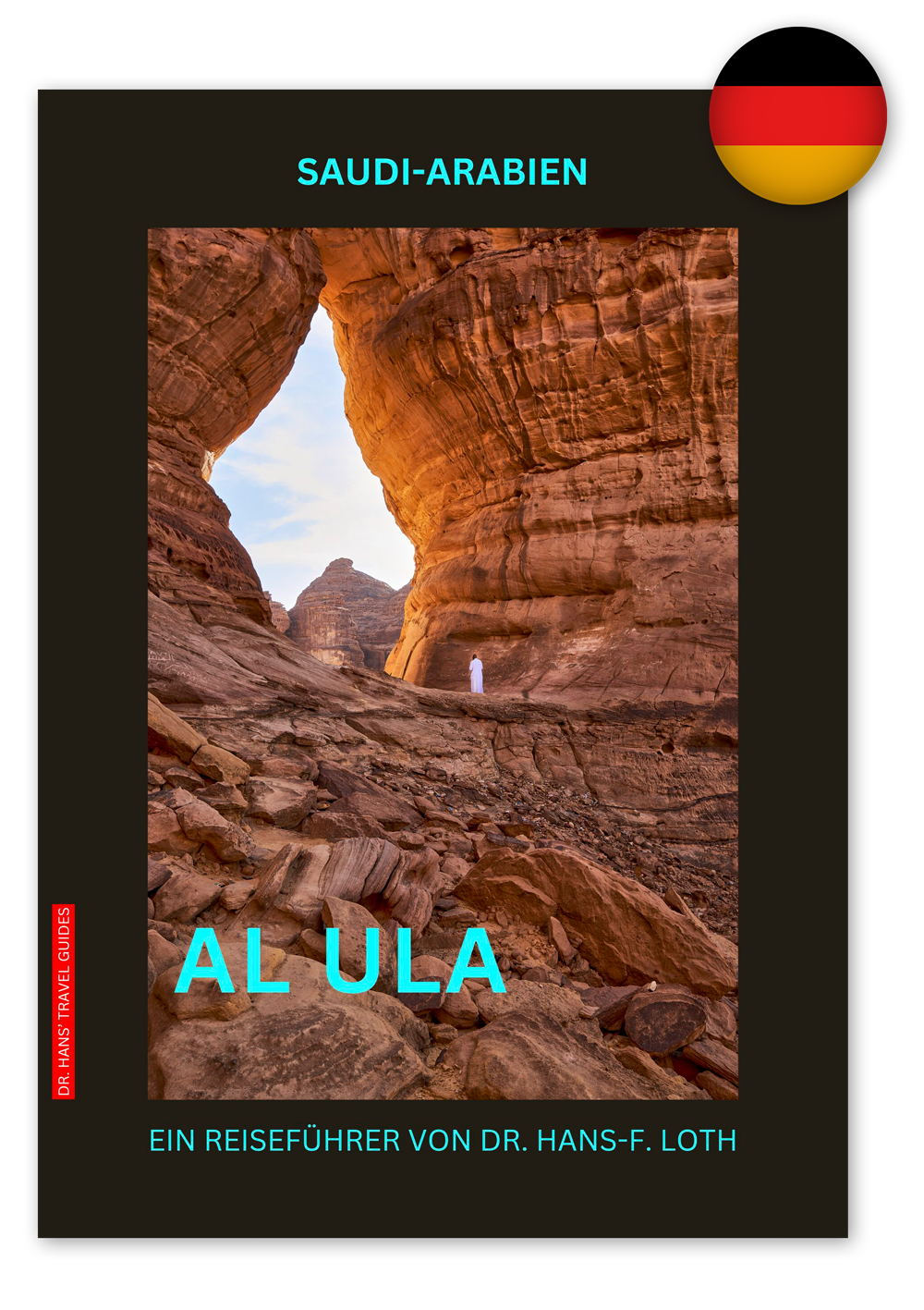
The only way to visit Jabal Ikmah is on an organised tour, either in a private vintage Land Rover or on a bus tour. Ikmah is a rocky massif, which s worth mentioning not only because of its imposing geological formation, but also because it is actually the site in Al Ula which, according to current knowledge, contains the most significant inscriptions and rock carvings from pre-Arabic, or at least pre-Islamic times, hidden in a remote canyon valley. There are probably thousands of centuries-old inscriptions carved and notched into the rock massifs of Al Ula. UNESCO has recognised their importance by including them in the “Memory of the World” Register. Al Ula is by no means the only place in Saudi Arabia where such inscriptions and rock carvings can be found. But like the other sites found in the country, the inscriptions and drawings in Al Ula prove that the assumption that the early desert societies of inner Arabia were unchanging and timeless is not supported by the facts. Rather, the rock art of Saudi Arabia is the mirror of its rich cultural heritage of the Bedouins or desert dwellers, which yields the most beautiful surprises and insights for you as a visitor today.
Thousands of inscriptions and painted rock carvings represent the different cultural phases, from the Neolithic to the recent past. Once you visit Jabal Ikmah, you will encounter naturalistic, schematic, abstract, mythical and mystical images that express the thoughts of their creators about the metaphysical world, beliefs, cultivation, the environment, human activities and the diversity of animal species under the climatic and environmental conditions of the time.
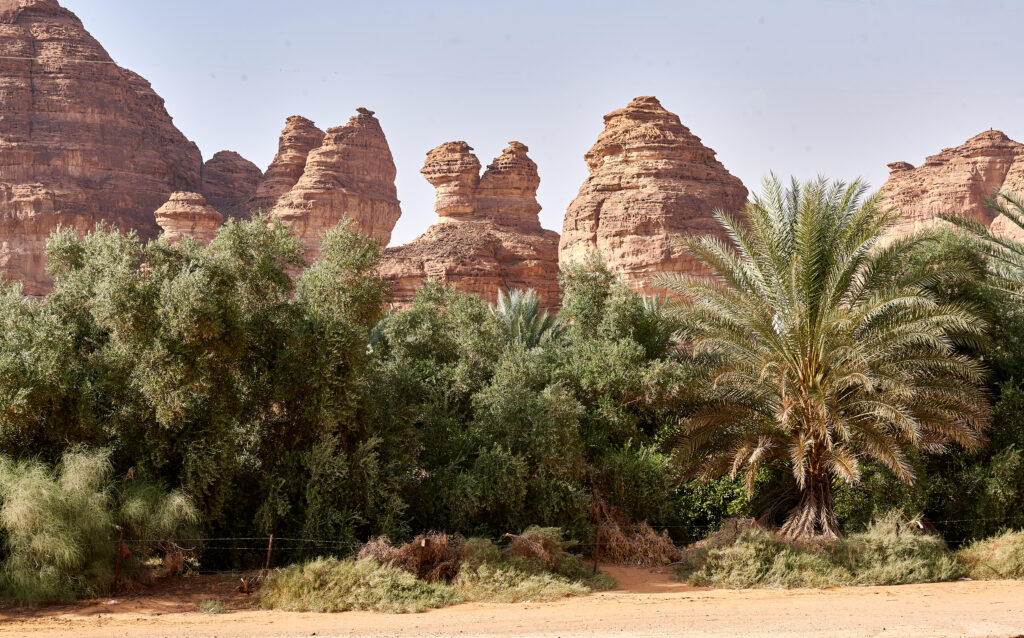
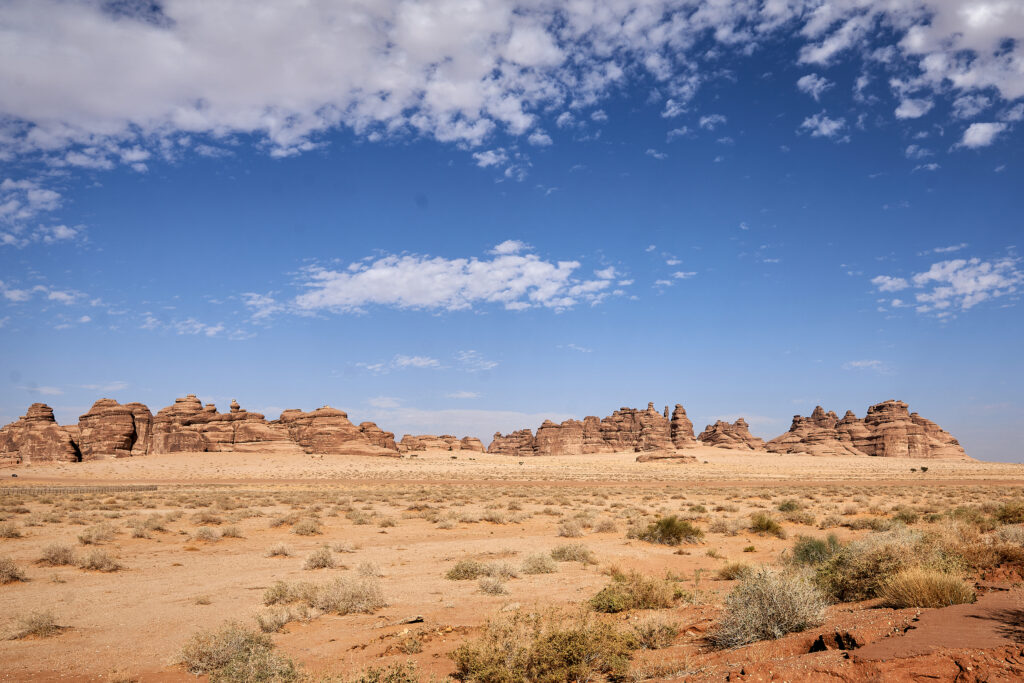
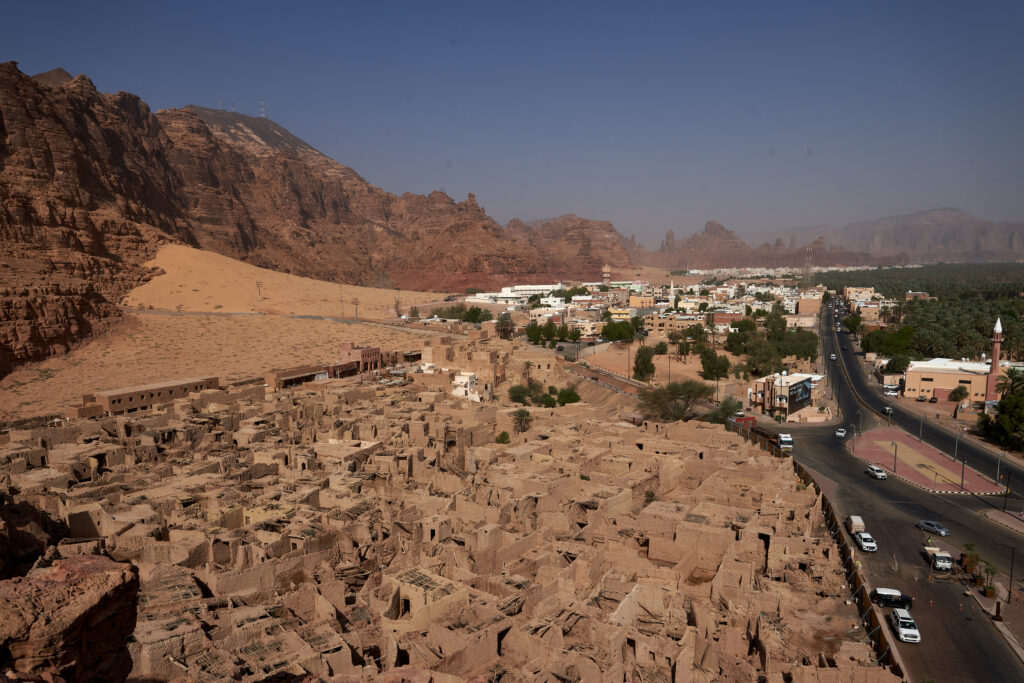
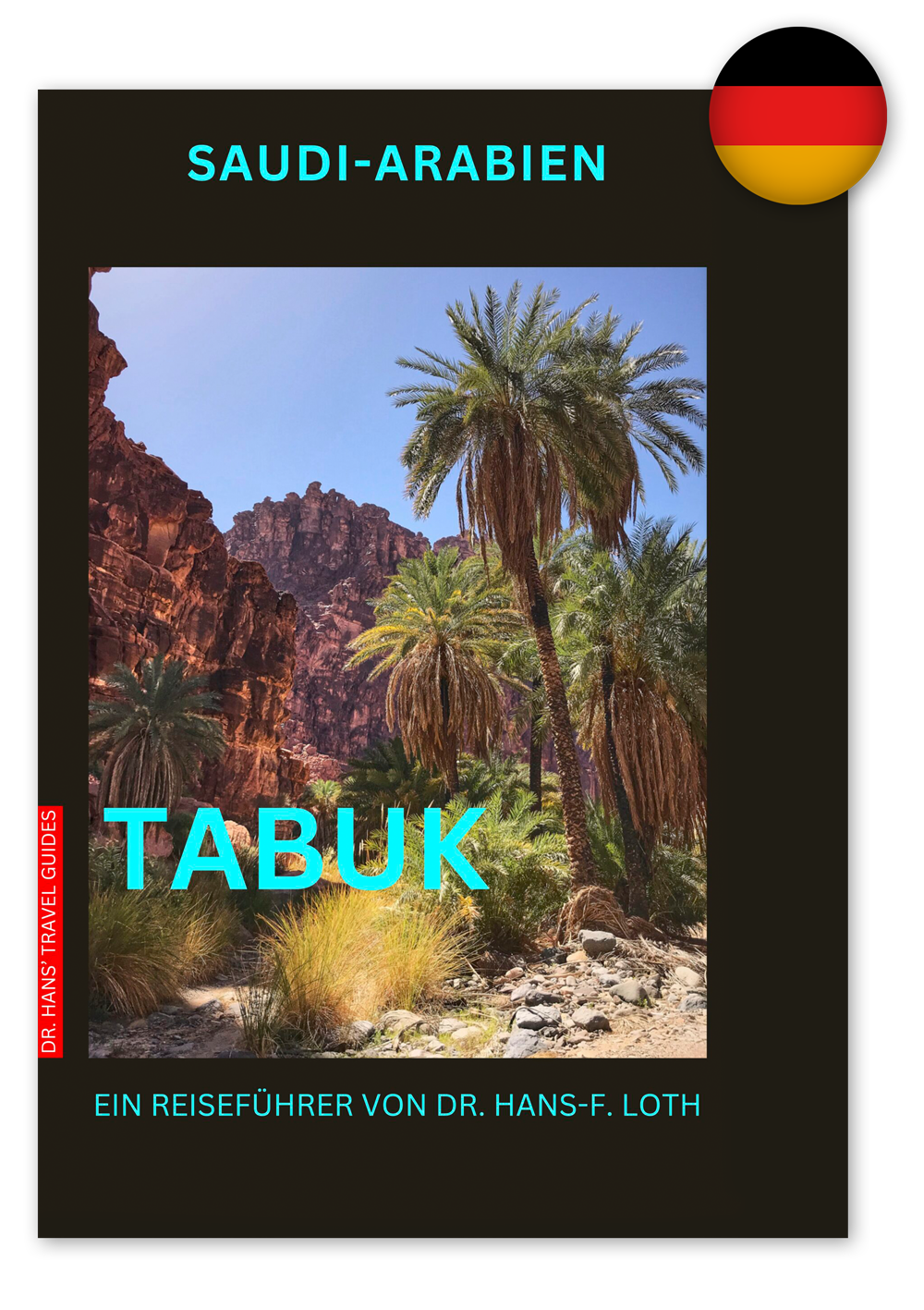
Indeed, Al Ula’s landscape is a ‘Synthesis of the Arts‘. It is no coincidence that people have been flocking to Al Ula for thousands of years. Geology, environment and climate have formed a unique symbiosis and have created one of the most attractive landscapes on the planet. The entire region is criss-crossed by a fascinating desert landscape. But don’t imagine a desert landscape like the Sahara, i.e. nothing but dunes, sand and heat. Rather, it is a combination of pure sandy desert and steppe desert, stretching into endless plains, dotted with scattered plants and animals that survive in this arid environment in a desert climate. Grasses with bush-like growth or shrubs have equally adapted to the conditions of the desert steppe and provide the animals with protection and food. The Hejaz Mountains rising from the desert plains hold within their protective folds lush oasis landscapes with date palms and citrus trees stretching over many kilometres, which have been fed by water basins and underground watercourses since ages which in turn were created times immemorial ago, when the Arabian Peninsula still benefited from much rainier periods. The surroundings of Al Ula are dotted with large and small palm oases that nestle in the middle of the desert sand against a picturesque backdrop of rock formations – far away from more notable human settlements. Together, they all contribute to giving the area a “green touch“.