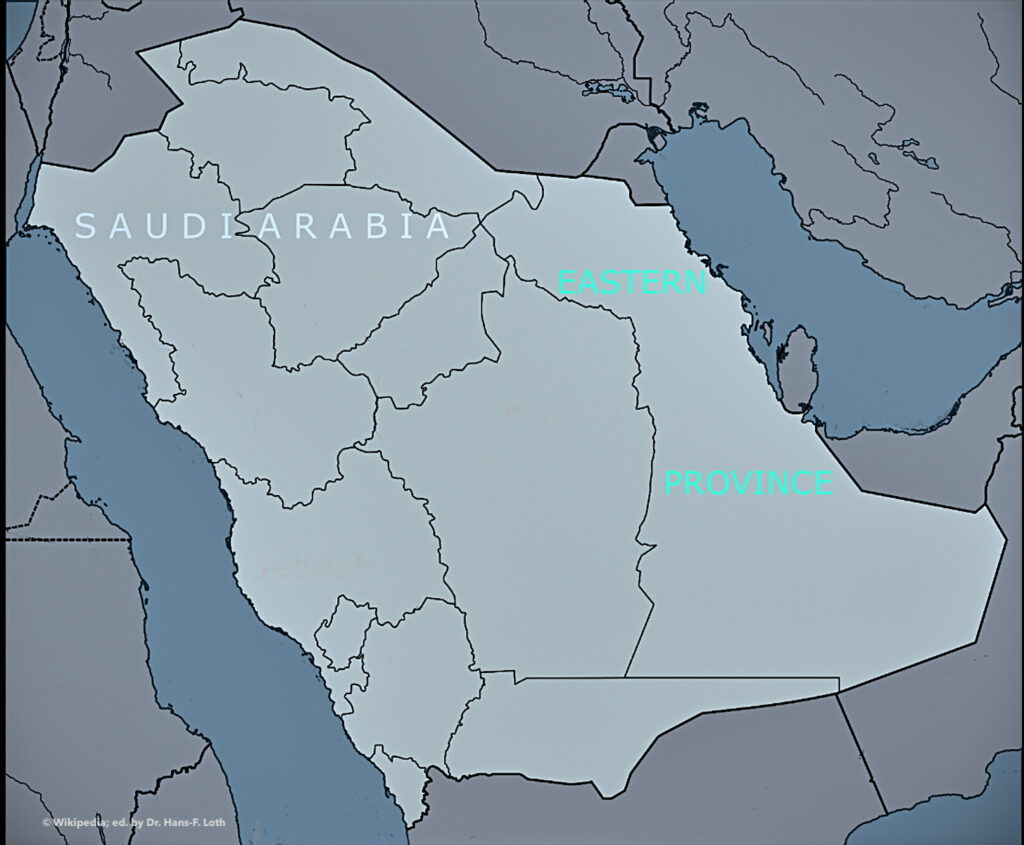
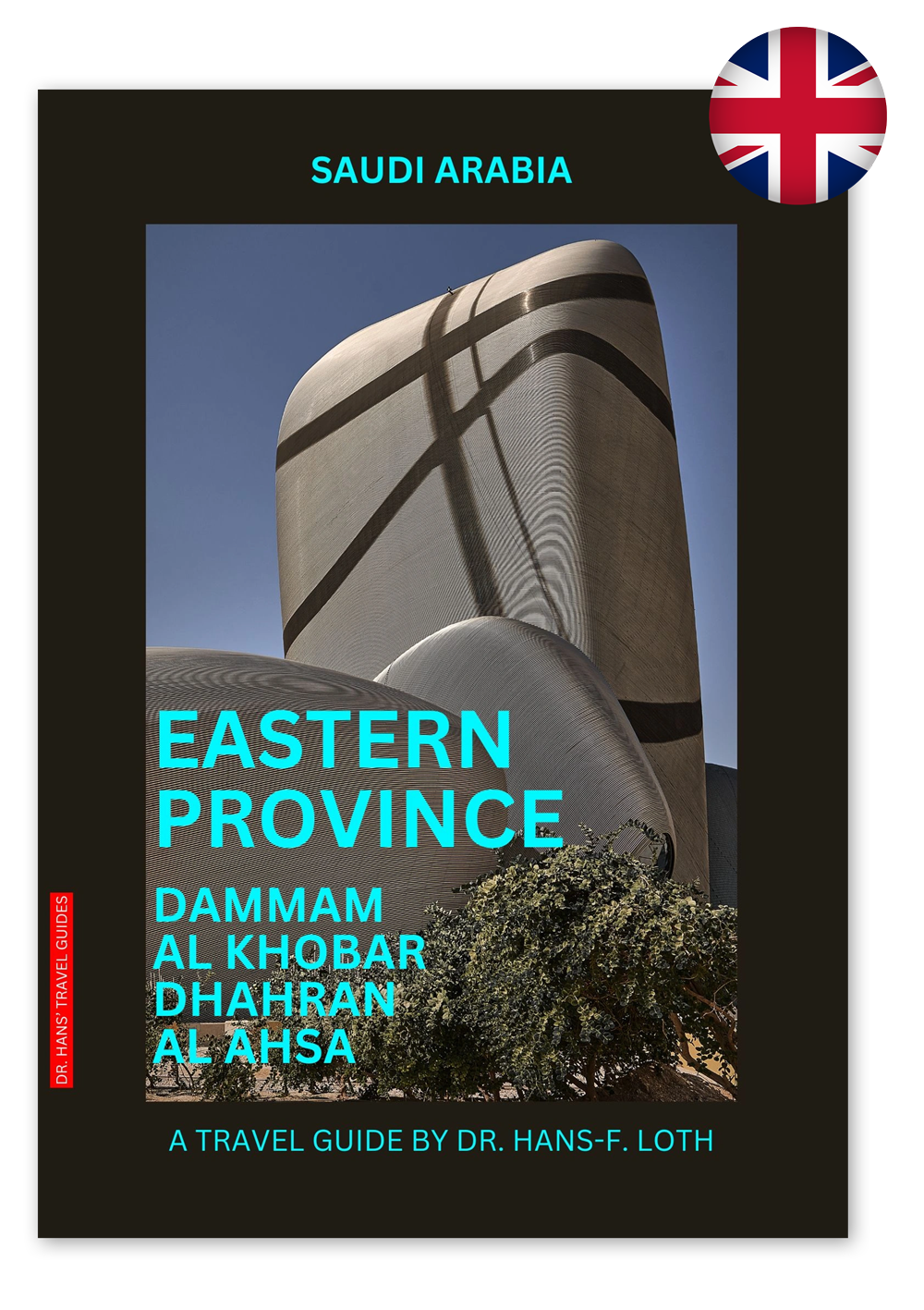
In addition to the main cities of the Eastern Province, namely Dammam and Al Khobar, Al Ahsa (or Al Hasā) must also be mentioned as a worthwhile destination to visit. Al Ahsa was named a World Heritage Site by UNESCO in 2018 and was chosen as the Arab Tourism Capital in 2019.
Al Ahsa is – this much is already noted here – the largest date palm oasis in the country, so no trip there is complete without at least trying some of the cultivated sorts. The Khalasah date, which grows exclusively in Al Ahsa, is considered one of the best.
The Hezawi bread, available in all bakeries in the city, is unique to Al Ahsa and is baked with dates added to the dough to sweeten it naturally. Locals like to eat it with cheese to add something salty to the sweetness.
Al Ahsa (also spelled Al Hasa) is equally the name for the administrative district (governorate),
the oasis area and the (main) city. Several small villages and the four towns of Al Hofuf, Al Mubarraz, Al Oyun and Al Umra were established in the oasis some time ago. The latter merged to form the city of Al Ahsa. Al Hofuf, originally called Al Ahsa, was the capital of the eastern region until 1953, when its administrative functions were transferred to Dammam. Today, the city names Al Hofuf and Al Ahsa are still used as synonyms. In classical Arabic, “Ahsa” is said to mean the “sound of water underground”. Thus, the very name expresses the extraordinary in this otherwise arid land that the area enjoys abundant underground water resources. The groundwater, in turn, has led to the growth of one of the largest oases in the world, with date palm groves as far as the eye can see. These groundwater reserves are the result of thousands of years of geological evolution. Unfortunately, the date palm groves are surrounded by high walls and (closed) access gates. Unlike in Al Ula, where there is a palm trail open to tourists, they are generally inaccessible.